On our side of the spiritual warfare we are engaged in these days is genuine Christianity, with authentic faith in the Father, Son, and the Holy Spirit and in objective truths. On their side, which unfortunately is currently winning the battle, is the godless religion of political correctness and wokeness, with devotion to the secular version of their holy trinity – “Me, Myself, and I.”
Let me make sure we are all on the same page of what “wokeness” is, or what it means to be “woke.” Wokeness is a cult – an ideology that comes from a delusional mindset, imagining seeing oppression and injustices such as racism and sexism where in reality they don’t exist. Wokeness has both irrational and ever-shifting tenets, where a person or proposition can be considered in good standing by woke principles one day, but proclaimed bigoted, hateful, or phobic the next day.
There are many recent examples of businesses and organizations going woke in order to be able to so-call “virtue signal” how supportive they are of the latest progressive causes or trends. For example, Nike used as their model to sell their women’s sports bras a man who has a mental illness of believing he is a woman, and Disney’s executives touted the company’s agenda to actively “add queerness” into their children’s movies and shows.
Schools can be woke, too, with the overwhelming majority of public school systems glomming on to wokeness these days, as well as are an increasing number of private and religious schools. Woke schools are to be avoided since they care more about promoting an aggressive denial of reality while also supporting subjective feelings than they care about teaching objective truths known through science and reason.
Over recent years, when as a Catholic elementary school principal meeting with prospective school parents who were checking out my school for possible enrollment, three societally-popular “woke” topics made up the most common questions parents asked me:
- “How does your school discuss ‘critical race theory’ (CRT) with students?”
- “How does your school handle the ‘black lives matter’ (BLM) movement?”
- “In what way does your school incorporate ‘diversity, equity, and inclusion’ (DEI) ?”
I couldn’t always tell if the parents were asking me these questions because they leaned conservative and wanted to be put at ease that my school and I were in sync with their principles, or conversely, if their questions were to confirm my school and I were woke-enough – that is, were politically-correct and believers in the current culture’s trends. Now, it didn’t matter if I could figure out their motive or not because without hemming and hawing I would always address these topics succinctly and honestly. I would happily guarantee that my Catholic school would never follow the latest woke philosophies or indoctrinate with unnecessary lessons but would always focus on basic education, namely reading, ‘riting, ‘rithmetic, and of course, religion.
Some parents had looks of relief on their faces after hearing my answers to their questions regarding the three-letter concepts of CRT, BLM, and DEI. But there were also parents who had confused or ticked-off looks on their faces because DEI and CRT are two of the hottest buzzwords in education, and BLM was the nation’s most popular movement in recent times. Most perspective school parents were led to believe that the best schools were those who gushingly supported these buzz-worthy educational and partisan topics. They ended up not enrolling their children in my school after hearing we weren’t woke enough for them.
It doesn’t require a meeting with the principal to determine if the school you are considering enrolling in is the right one for your family. You might be able to simply search online through the school’s philosophy statements and curriculum guides to see if you can locate the terms: critical race theory’ (CRT), black lives matter (BLM), and diversity, equity, and inclusion (DEI). Sometimes schools won’t transparently name these programs because they don’t want to set off suspecting, complaining parents. Thus, you might not necessarily see a school blatantly labeling exact terms but instead will disguise these progressive programs with benign terminology. However, these woke schools reveal themselves by whom they hire on their staffs. If the school has on staff a so-called diversity coordinator or an inclusion specialist, they have virtue-signaled how woke they are and how important race-based principles and Marxist-connected programs are to them.
Whether these movements are proudly promoted district-wide or shrewdly, clandestinely inserted into a classroom lessons or school events, the mere existence of them reveals the viewpoint of the principal and teachers. To be blunt, if these programs are a part of the school, you might want to do more than merely become skeptical if this is the right school for you. You might want to act more boldly and follow Jesus’s words, “Shake off the dust from your feet as you leave that house” (Matthew 10:14).
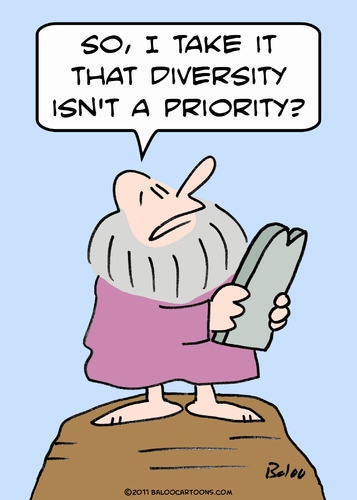
When clarifying my position to parents who questioned if we promote diversity, equity, and inclusion (DEI) in my school, I would start out by discussing the subject of the first letter in the acronym – “D” for “diversity. ” I straightforwardly asserted we did not strive to be a so-called diverse school. If diversity is measured by having a higher-than-average ethnic-minority student population or by having a varied parent population in terms of some financially well-off families and some single parents who struggled to make a living, then you could call my school diverse. But we never made it our goal to be a so-called diverse school because from an educational standpoint, the best way to assure a strong, cohesive student body and a unified school parent community is to stress our similarities more than our differences.
Diversity is not what I consider a bad word. After all, as Catholics we marvel at the diversity God used when he created different people, languages, animals, geographies, and plants. But when used in educational terms, a Catholic school should never desire a diverse student body, in that we need every school family to be the same – either Christian or some type of God-believer – because the reality is Catholic schools were founded with the objective of educating Catholic students coming from Catholic families.
Besides the similar religious beliefs of my school’s families, my school also wasn’t diverse in that our students all had to be between the ages of 4-to-14, with none younger or none older, and they all had to look alike. What I mean by that is that every boy must wear blue slacks and a white polo shirt, every girl must wear a plaid skirt (or slacks) and a white shirt, and no one is allowed to color their hair or have other hairstyles different from the school’s norm. This supposed lack-of-diversity in my student body is what made our school community run smoothly and effectively.
Today’s strong quest for forced diversity in schools is anti-Catholic. Diversity is not a virtue. You won’t find the word diversity in the Catechism of the Catholic Church or in any of the teachings of the doctors of the Church. Instead, the term unity is what is preached. As Saint Paul reminded us:
“In Christ Jesus you are all children of God through faith. As many of you as were baptized into Christ have clothed yourselves with Christ. There is no longer Jew or Greek, there is no longer slave or free, there is no longer male and female; for all of you are one in Christ Jesus. And if you belong to Christ, then you are Abraham’s offspring, heirs according to the promise.” (Galatians 3:26-29)
Continuing with explaining the pitfalls of DEI, and addressing the second letter in the acronym – “E” for “equity” – I believe a school is on the right track if when talking about equity in education they are talking about teachers working toward creating lesson plans and an environment that takes into consideration the different learning styles of their students. But a school is off the rails if their meaning of equity is stretched to include the practice of their teachers assuming they (if white) and their white students have so-called white privilege and thus adjustments have to be made in lessons and classroom procedures to defer to and benefit the so-called students of color. Be wary of sending your children to a school where the faculty believe in the race-based stereotyping and fallacious, inflammatory generalizations that compose the white-privilege belief.
As for the third letter in the DEI acronym – “I” for “inclusion” – a true Catholic school cannot promote inclusion if it means the school must enroll everyone – even those who openly go against Gospel values. As a Catholic elementary school, we welcomed everyone from ages 4-to-14, but only on Christ’s terms, not the applicants’ terms. In other words, if an applying family’s public beliefs were atheistic and there was open defiance against the school’s practices like religion curriculum and daily prayers, then the family and their child were going to be excluded from our school. Fortunately, in my case I never had to brusquely state a family wasn’t included. The atheist or non-Christian family would figure it out and either not apply or withdraw once they realized there was not a good fit between their beliefs and our school’s.
The diversity, equity, and inclusion movement will not improve your children academically and will waste valuable time that teachers should be using to teach reading, ‘riting, and ‘rithmetic. If your child’s school promotes DEI (and/or CRT and BLM – which I will discuss in future posts) you should probably go find another school ASAP. The only 3-letter word you should want to see imbedded in your school’s culture is GOD.
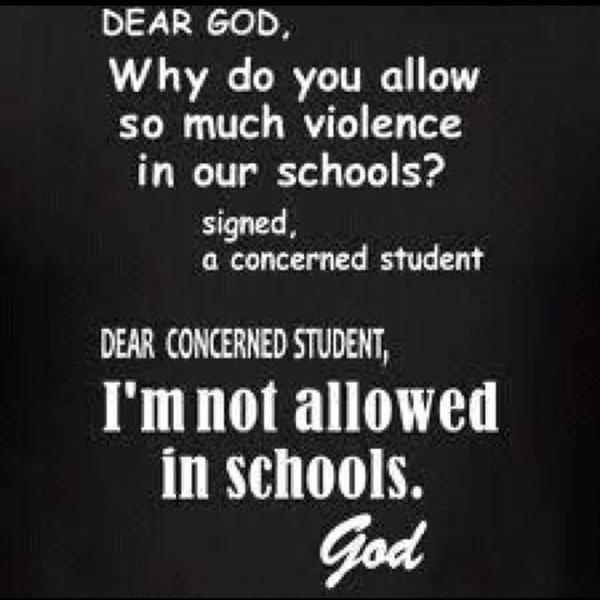
Most public schools, especially those in big cities or liberal states, not only keep God out of their schools by not allowing students to pray and not even mentioning the existence of Christianity in any history lessons or school philosophy discussions, but they essentially demonstrate they are anti-God in many of their practices. These government-run schools create so-called LGBTQIA2S+ clubs, allow their teachers to discuss their sexual orientations with their students or at least fly homosexual-connected rainbow flags above the whiteboards, and teach lessons that promote anti-Christian ideologies like Marxism and Communism.
Most kids who attended public schools during the Baby Boomer generation started their day with a teacher-led prayer. But in the generations since, because of a 1962 Supreme Court ruling making it unconstitutional for public school teachers to lead a prayer or read out loud from the Bible, most schools have turned their campuses into “God-free zones.” Not only do these schools now outlaw praying and the Bible, but often their students and/or teachers will get disciplined if they wear religious-themed clothing, produce class projects on biblical characters, mention Jesus in class discussions, or create Christian extra-curricular clubs.
It’s a tough battle for an authentically Christian family to have their kids enrolled in a school that bows to DEI but spits on GOD. Most public schools these days are not merely religiously-neutral in their policies and practices; they are anti-religious. A faithful Catholic/Christian family should think twice about enrolling their child in the public school system, and should do all they can to try at make it possible for their kid to go to a Catholic/Christian school or be homeschooled.
If a family stays in the public system, then for at least seven hours a day, five days a week, they are allowing their child to be exposed to educators and an educational system that not only promote concepts in direct opposition to Gospel values but often demonize their family’s beliefs and holds in contempt their Savior and all the Saints whom their child should be emulating.
Speaking to these parents who insist on remaining in godless public school districts, please make sure both you and your children understand your rights and are prepared to defend yourselves in situations such as these which you will encounter sooner or later:
• Students have the right to discuss their faith with other students in informal settings such as the hallway or cafeteria.
• Students have the right to read their Bibles or religious books at school during “free times.”
• Students have the right to pray grace before lunch or pray before starting a test (but it has to be a silent prayer).
• Students have the right to use Christian-themed notebooks and school supplies.
• Students have the right to wear religious-themed clothing such as garments with Bible verses on them (unless the school has a dress code that doesn’t allow messages of any type on clothing).
• Students have the right to self-organize and self-lead a Christian-club that meets before or after school on school grounds (as long as the school allows any other types of extra-curricular clubs).
In future blog posts, I will discuss why CRT and BLM are just as awful as DEI to find in your child’s school, how to know you are enrolled in a genuinely Catholic school, and why homeschooling might be the best choice for your kid’s education.
 A PRINCIPAL'S PRINCIPLES FOR PARENTING