Many of us adults have experienced a “slump” after we worked to get in shape and/or lose weight, but then after all that hard work we didn’t maintain it. Perhaps we got so busy at work that we started missing our regular trips to the gym or perhaps we started to eat the junk food we had previously been so good at staying away from. By getting into a slump we reverted back to becoming unfit and overweight since we no longer felt like doing what had previously been so good for us.
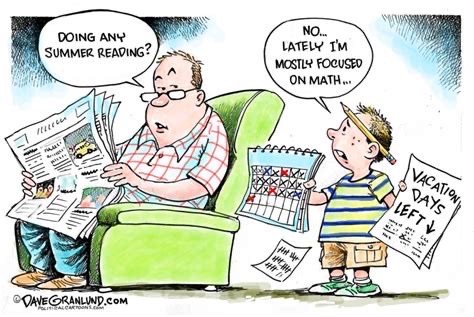
In a similar way, your children get into a slump every summer when they quit doing what had previously been so good for them – that is, daily academic training – and thus end up forgetting educational knowledge and math facts and losing some reading and writing skills. When adults stop lifting weights they start losing the muscles they had gained. When children stop exercising their brains over summer vacation they start losing the reading level and math level gains from the recently concluded school year.
Summer slump is a real thing. It is an actual occurrence where students return to school in the fall after two or more months of not stimulating their minds and practicing their skills and find themselves at the start of the new school year with lower reading and math levels than where they finished that prior spring. Various studies have proven that children who read more books over the summer score higher in the fall on reading tests than those who did not read over the summer and that kids can lose over two months of math skills they learned in the just-completed school year if they don’t partake in any summer math education. Anecdotally, I can attest as a 40-year educator that teachers typically have to waste all of the first month of the new school year in simply reviewing the previous year’s grade level curricula because summer slump caused their students to not be ready from day one to start learning at their new grade level .
To combat summer slump, parents should work reading, math, writing, and other academic and study skills into each week of vacation between traditional summer fun and family trips. This doesn’t have to look like “actual” school where the youngsters feel like they really don’t get a vacation, but there does need to be structure. One of the reasons kids have developed a slump when they return to school at the end of summer is because they have gone about ten weeks with no structure and then are expected to flip a switch the day they return to school.
Structure is created by having a Monday through Friday schedule of learning-related lessons and activities that you and your kids follow, including everything from solving math problems to creative writing. Moreover, nothing is more important for your children to continue throughout summer vacation than reading.
Children who will be entering grades K-5 should read for at least 20 minutes every weekday in the summer, practicing the reading strategies they learned over the preceding nine months. Middle and high school aged kids should read independently for at least 30 minutes daily. These 20-30 minutes do not have to be continuous. If it works better for your family’s schedule to build in some minutes in the morning and some later in the evening, that’s fine. For younger children, these minutes need to include a combination of times parents both read to and read with them.
It may motivate your youngsters to read a certain number of pages or chapters each day, and keep track on their personal reading logs. Perhaps weekly treats are won when goals are reached. It is also motivating if reading is a family activity, with mom and/or dad reading at the same time as the kids, perhaps each comfortably set up with their specific reading “nooks” in the house, such as the couch, a beanbag chair, or even an outdoor lounge chair.
Furthermore, children are more likely to read if they have a say in what they read, so they should be allowed to choose some books from the public library or to occasionally buy at a bookstore. Note that public libraries have summer reading events and incentive programs for kids to check-out books, but be cautious because today’s public libraries are more often than not very “woke” in terms of censoring Christianity-connected books while promoting secular and sometimes decadent books.
Only some of the books for summer reading should be kid-chosen; other books need to be picked out by mom and dad. If you have a child who gravitates toward comic books or “graphic novels,” these should only be read in moderation. You’ll hear many librarians and teachers these days say, “I don’t care what the kids read, as long as they’re reading,” but this sells their students short. That is similar to a parent saying, “I don’t care what my child eats, as long as he/she eats.” No, you do care, and thus you make sure there are more fruits and vegetables in their diet than sugary snacks.
Comic books and graphic novels don’t develop children’s abilities to sustain the kinds of attention and concentration demanded by traditional books. Reading these modern styles of books looks like this: read 15 words and look at a picture; then read 10 more words and look at another picture; then read 1 interjection and look at another picture; etc. Similar to a weight lifter not being able to develop muscles if he only lifts barbells weighing miniscule pounds, intellectual stamina won’t result if a kid solely or mainly reads comic books and graphic novels.
Since you will want to challenge your kiddos to read hundreds and even thousands of words at a run, some of this “heavy” reading should be comprised of long-established, classic books. The following example from a classical-model school is what a serious student would read over the summer (or have parents read to youngest ones) to improve reading skills while also gaining insights and some virtues:
Entering Kindergarten
•Make Way for Ducklings •Mother Goose nursery rhymes •Dr. Seuss books •Winnie the Pooh •When We Were Very Young •William Steig series •Owl Babies
Entering Grade 1
•The Nutcracker •Encyclopedia Brown series •The Sword in the Tree •Paddington Bear series •Now We Are Six •A Birthday for Frances
Entering Grade 2
•Little House series •Stuart Little •The Mouse and the Motorcycle •Roald Dahl series •The Thirteen Clocks •Snow Treasure
Entering Grade 3
•The Trumpet of the Swan •Sarah, Plain and Tall •Mr. Poppers Penguins •The Thirteen Clocks •The Tale of Despereaux
Entering Grade 4
•Calico Captive •A Wrinkle in Time •Misty of Chincoteague Island •The Black Stallion •Where the Red Fern Grows •Benjamin West and his Cat Grimalkin
Entering Grade 5
•The Reluctant Dragon •Roll of Thunder, Hear My Cry •Little Lord Fauntleroy •Anne of Green Gables series •Old Yeller •Heidi •The Black Arrow
Entering Grade 6
•My Side of the Mountain •Little Men •White Fang •Redwall series •Captains Courageous •The Hobbit
Entering Grade 7
•Oliver Twist •Watership Down •The Last of the Mohicans •The Lord of the Rings trilogy
Entering Grade 8
•Ben Hur •The Hunchback of Notre Dame •Ivanhoe •Jane Eyre
Entering Grade 9
•The Odyssey •My Ántonia •Billy Budd •The Old Man and the Sea
Entering Grade 10, 11, 12
•Various Greek mythology •Various poetry •Gulliver’s Travels •The Picture of Dorian Gray •The Importance of Being Earnest •And Then There Were None •Whose Body? •Wuthering Heights •All the King’s Men •Of Mice and Men •The Great Gatsby •A Connecticut Yankee in King Arthur’s Court •Murder in the Cathedral •The Brothers Karamazov
Friday is a good day to set up some reading practice that will also serve as a faith formation lesson. To prepare your children for understanding the Gospel and Scripture readings they will hear at Mass that Sunday, those who are reading at a high enough level can read those passages from the Bible or a Missal, while mom and dad can read aloud to little ones. There is also a great, free resource – The Kids’ Bulletins – that your youngsters will have fun reading to learn about Sunday’s upcoming passages.
Parents might want to choose one day each summer week to find a recipe the family would like and lead some cooking fun with their sons and daughters. Cooking not only involves reading skills and the importance of following step-by-step directions, but there is math and science learned as well. Of course, the best incentive is you get to eat what you create!
Finally, Catholic families need to make sure some reading is of Catholic-themed books, such as books on Saints and fiction books containing Catholic characters and/or Gospel-values. Some ideas for these types of books can be found here and here.
Parents who keep structure in their children’s summer schedules and regularly make their kids take time for reading, writing, and math practice will better set up their youngsters to have a successful start to the upcoming new school year. As importantly as abolishing summer slump, mom and dad will have created fun activities for the family to engage in together while also eliminating from their children’s vocabulary the famous phrase, “I’m bored!”

 A PRINCIPAL'S PRINCIPLES FOR PARENTING
Leave a comment