
If you were on social media last month, you no doubt saw a large segment of America come completely unhinged because an authentic Catholic gave a commencement address at a devout Catholic college to faithful Catholic graduates about fundamental Catholic beliefs. No matter how common sense that incident was, the secular world cannot allow Christian truths to have dominion over their anti-God agenda, and thus, a professional football player came under fire for his truthful, inspiring commencement speech at Benedictine College which appealed to the graduating class to become Catholics that live up to the high ideals of our Faith.
Harrison Butker, a three-time Superbowl champion, made a speech which addressed the hypocrisy of prominent people who don’t follow Church doctrine but proudly consider themselves “Catholic,” the number of weak bishops who don’t properly lead their flocks, and a depraved culture that literally throws parades to celebrate unnatural sexual acts. The one section of his speech which appears to have most enraged not only secular society but also inauthentic Catholics was Butker’s comments regarding women and mothers.
He stressed the foundational role of the family and the gift of motherhood. Because today’s disordered society finds it offensive to point out that men were made to be masculine, women were made to be feminine, and the family was planned by God to be formed with unique father/husband and mother/wife roles, radical feminists and disturbed leftists were triggered by Butker’s truthful statements. They now want him fired, some even promoted violence against him, and the NFL issued a statement to denounce Butker’s “hateful” speech.
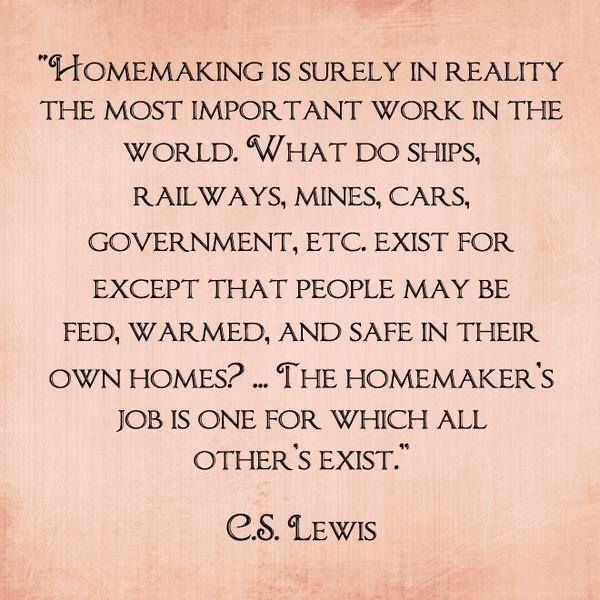
Butker eloquently told the college graduates that the call to Christian parenthood is more fulfilling than the pursuit of a career path, and specifically that the role of homemaker is distinguished and should be cherished. His statements would not have been considered one bit controversial if he said this in 1974 instead of 2024 because back then in America, approximately 75% of families had a husband/father who worked full-time outside of the home and a wife/mother who worked full-time inside the home and around her children. But then came the sexual revolution and radical feminism movement which were in full force by the end of the 1970s, and American society started seeing a dramatic change in having more and more women join the workforce and families becoming dual-income. The number of families in the United States in which both dad and mom worked outside the home doubled from about 21 million in 1970 to about 41 million in 2019, or from 25% of families to 61%.
This whopping increase in moms working outside the home not only had a significant impact on the way families lived, but created a culture where “housewife” and “homemaker” became derogatory vocations, considered patriarchal and demeaning. Whereas the initial feminist movement of the 19th century and early 20th century was reasonable as it pushed for basic rights for women, such as to be able to vote, the modern, second-wave feminist movement we find ourselves in now is radical and maniacal. They stand as the enemy of the traditional family model, and loathe the idea of a homemaker wife/mother.
What Butker’s speech was championing was the female half of a family choosing the vocation of homemaker over that of a fulltime, work-outside-the-home career. What makes a homemaker so extraordinary that the label “stay-at-home mom” doesn’t do it justice is that she has such an extensive job that involves cooking and cleaning, budget setting and purchasing control, transporting and accompanying her children, and volunteering on church, school, and community projects. Working as chefs and nutritionists, child psychologists and medical advisors, and teachers and educational specialists, homemakers shape families.
It is essential to note that in the model of a mom not choosing to work outside the home, she still plays a crucial role with the family’s finances even though she is not bringing home a paycheck. A homemaker finds fulfillment in the hard work she does even though the “breadwinner ribbon” isn’t affixed to her. She is making other substantial contributions of skills that save her family money, from home-schooling to child-care to housework. Females who choose the homemaker vocation and adopt this traditional formation of a family contribute financial value to the family while bringing paramount value to their children’s development and well-being.
A most likely negative outcome of women who choose to work 40 hours a week outside the home is that by choosing career over family the mom will not be the one raising the kids. Instead, she will have to turn over the training up of her kids’ minds and souls to either potentially unprincipled daycare workers, corrupt educators, or a latchkey environment. These parent-replacements are no match for the love, nurturing, moral development, and concern that a mom and dad provide their children. Moreover, the negative result of moms working full-time outside the home is that their children will usually be worse off as evidenced by a more likely chance of increases in obesity, sexually transmitted diseases, mental health problems, and use of psychiatric medication by youngsters who don’t have a fulltime parent at home.
God created the human race with the plan that women for the most part would be made naturally more nurturing and thus a perfect choice to care for young children, while men would be created to be providers as for the most part they were naturally more competitive and physically stronger. These distinct, complementary differences were built into who females and males are as distinct images of God. What God purposely created was for women to inherently be called to love their masculine male partners, to wisely combine their feminine talents with his in raising their families, and to assume homemaking as their priority job over a different type of career.
Of course, marriages and the family unit formation involve openness to some fluidity. We don’t want either extreme – the maniacal feminist side that desires women be just like men, or the other side that has oppressively rigid sexual stereotypes which ranks women inferior to men. The side of feminism-vs-masculism that makes sense is in the middle of these extremes and is what the Catholic Church – and Harrison Butker – advances. It’s called complementarianism.
Complementarianism – derived from the word “complement” – is the belief that men and women have separate, though equal roles in marriage and family life. Just like complementary colors work well together to create beauty, males and females complement each other for a more beautiful whole. It is the truth that men and women were created to be united in one flesh, to exist for the other, to work together for both their good and the good of their sons and daughters.
Radical feminism does not recognize and appreciate the purposefully designed gifts of both sexes but aims to eradicate gender roles, and thus their ideology cannot be endorsed by authentic Catholics. That is why Butker promoting the homemaker job as the preeminent vocation should be applauded by all Catholics. He never said that wives/mothers who choose to work full-time outside the home are appalling or that they shouldn’t be allowed to have careers. For a variety of understandable reasons, many women are not able to be full-time homemakers.
The message of Butker’s speech for the young women in the audience was that today’s culture is in error by believing a fulfilled life is one where mom joins dad in seeking fulltime employment so the family can enjoy a bigger house, more gadgets and toys, and fancier cars. If one were to talk to any senior-citizen-age parents who did just that when their children were young and still living at home, none of these sage moms and dads would say now in their golden years that they regret not working outside the home even more so to accumulate more riches. Rather, they would say they wished they would have not been so tied to their careers and would have spent more time with their sons and daughters focusing on home life.
Today’s godless society plays every angle in their effort to destroy our Creator’s beautifully designed family unit. Evidence of the culture’s wickedness was evident last month with their bashing of Butker’s commencement address. The first line of defense against the family’s enemy is the critical and significant role of homemaker. With her ability to spend a considerable amount of time training up her youngsters’ minds and souls, the homemaker is predominantly responsible for forming her and her husband’s children into little disciples and helping them grow up counter-culturally. By choosing a vocation which gives her authority over daily family decisions, presents opportunities for creativity and nurturing, and allows her to use her God-given feminine gifts directly for the good of her spouse and kids, the homemaker mother/wife is to be hailed.
 A PRINCIPAL'S PRINCIPLES FOR PARENTING
Wonderful ! Please preach it! Homemaking is an honor and. I have blog post coming up soon about how Mothers can make or break a family and the generations that come after. I’m honored to watch my 5 kids grow from birth, haven’t been away from them longer then a day (being at a hospital) career parents really.miss out on some amazing moments and teaching opportunities. And a father in the home is priceless! I’m still a little hurt from my dad leaving home to start a new family which he also left to start a new one! 🙃 I will tell you one thing I was never the same when my dad who was my best friend as a kid left, never was the same compared to the security I felt when I had two parents I saw everyday all day.
LikeLiked by 1 person
Danny – Excellent question to ask!
LikeLiked by 1 person
Dan,
You continue to share invaluable wisdom and insight ripe with – what is today “un-common” – common sense. May your words reach the ears (and hearts) of the lost.
I challenge “career” parents with this: “Growing up, would YOU rather have been raised by a daycare worker or your mother or father?” If they are honest and sincere, they ALWAYS choose a parent.
Danny
LikeLiked by 2 people