What is a Catholic to do about the poorly performing or outright disastrous clergy who have shown themselves to be cowards by their silence and passivity, or even worse, revealed themselves as wolves in shepherd’s clothing through their vigorous deception of their flocks, leading them on the wrong path and putting their souls in danger?
Parts 1 and 2 of “What Are Catholics to Do When Our Clergy Let Us Down?” discussed how many of our cardinals, bishops, and priests wonderfully fulfill their mission to teach and lead those in their care, but regrettably we see some men of the cloth who are ineffectual, shameful, or categorically evil. This Part 3 offers advice and hope for the faithful in the pews who want to know what can be done about the clergy who are failing us.
Of the dozen men our Lord Himself selected to be His first “bishops/cardinals,” one of them straight up betrayed him for a payment in silver coins, one of them three times denied knowing Him, and one of them wouldn’t believe that Christ rose from the dead unless he could have the tangible proof of sticking his fingers in Jesus’s wounds. Most of the very first shepherds at times acted like either cowards or wolves when one realizes that only one original cleric – John – was brave enough, honorable enough, and faithful enough to stand at the foot of the cross alongside Christ’s mother.
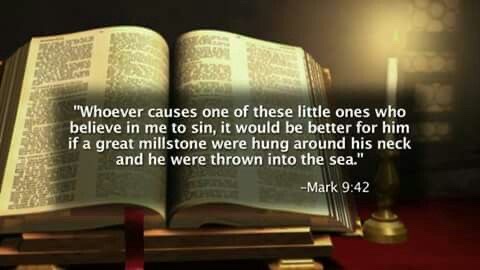
Jesus warned against pastors and shepherds who purposely leads others to sin:
To go along with our Lord’s words, Scripture tells us that indeed one can oppose errors coming from a shepherd – even from a pope – while still respecting his office. Paul opposed Pope Peter “to his face,” to which Saint Augustine later commented:
“By teaching that superiors should not refuse to be corrected by inferiors, St. Peter gave posterity an example more rare and holier than that of St. Paul as he taught that, in the defense of truth and with charity, inferiors may have the audacity to resist superiors without fear.”
The great Saint Thomas Aquinas taught that correcting a bishop or even a higher ranking member of the clergy who sins is actually a work of mercy:
“Some say that fraternal correction does not extend to the Prelates either because a man should not raise his voice against heaven, or because the Prelates are easily scandalized if corrected by their subjects. However, this does not happen, since when they sin, the Prelates do not represent heaven and, therefore, must be corrected. And those who correct them charitably do not raise their voices against them, but in their favor, since the admonishment is for their own sake. … For this reason, … the precept of fraternal correction extends also to the Prelates, so that they may be corrected by their subjects.”
When the Church’s hierarchical leader on Earth and some of the cardinals and bishops directly underneath him are doing poor jobs, a Catholic lay person’s sentiment should not be to leave the faith. Instead, one should admonish the sinner and engage in prayer for these erroneous men of the cloth and for the purification of the Church. While the Catholic Church is immaculate, the individual leaders in the Church are not. But this in no way changes the flawlessness of the Church that Jesus founded.
“Thus says the Lord: ‘Cursed is the man who trusts in human beings…Blessed is the man who trusts in the Lord.’” (Jeremiah 17:5,7)
Granted, it can be very frustrating to endure inadequate Church leadership and to suffer with cowardly and/or wolf-like priests and bishops in our own diocese or parish. But we must stick it out because if we choose to leave the Church out of disgust – which is unfortunately what some defeated Catholics do – we are only putting our salvation in jeopardy. During the time of Noah, no one was saved who stayed outside the ark. Similarly, we put ourselves in peril if we think we can remain outside the religion Jesus started and simply “be spiritual” without ever attending Mass again or with no longer receiving Sacraments.
The Church is Christ’s bride. So we must have faith that He will save His bride. We read about the disciples being concerned and frightened when a great storm arose on the sea and their boat was being swamped by the waves. So they woke Jesus, shouting, “Save us, Lord! We are perishing!” Christ’s calm reply before rebuking the winds and calming the waters was, “Why are you afraid, O men of little faith?”
In a similar vein, while it is not our job to save the Church from being swamped by the waves of heresy and hypocrisy that are threatening to sink her, what is our job is to both charitably call out inferior shepherds who either silently cower or actively preach error and to pray.
Our first prayer should be of thanksgiving for God gifting us with those priests, bishops, and cardinals who do serviceably shepherd us. The next prayers can be various prayers of petition, such as these examples:
- For the repentance and conversion of failing clergy;
- For God to gift the virtues of wisdom and prudence to bishops and cardinals so that they “stay in their lane,” focusing on saving souls and bringing people to Jesus instead of on saving whales and bringing in aliens illegally;
- For God to gift the virtues of humility and temperance to our parish priests when they say Mass so that they perform the sacrifice of the Mass in the one, high priesthood of Jesus Christ instead of making Mass entertainment and about themselves, like these dishonorable clerics did:
While it is indeed bad news that we have both cowardly and wolf-like clergy who have led some Catholics into confusion and error, the good news is many other Catholics have recognized this faulty shepherding and become inspired to dig deeper into tradition and doctrine. So while ineffectual or errant clerics have made a mess with their tainted leadership, at least it has produced a positive effect of awakening many lay Catholics, which can only lead to a more faithful Church in the long run.
Further encouraging news is there are recent reports that our present era of a high percentage of clergy comprised of politically liberal and theologically progressive priests is coming to an end. The younger cohort of more recently ordained men of the cloth coming up through the ranks are more likely to be politically conservative, theologically orthodox, and eager to transform their parishes back to honoring traditions and properly following doctrine. In addition, it appears our most traditional dioceses are producing the most future priests.
May God continue to reveal the poorly performing clerics and inspire them to repent and convert, and may Catholics pray that these erring men raise themselves up to the dignity Christ intended by being true shepherds with the courage to lead and save souls.
 A PRINCIPAL'S PRINCIPLES FOR PARENTING
Leave a comment