In my decades of experience as an athletic coach and school principal, the teams and staffs that most prospered were those with one person recognized by all as the obvious leader and one top assistant.
This assistant closely collaborated with and endorsed the leader’s vision. In turn, the leader encouraged his associate to contribute, especially in areas where the leader wasn’t as strong.
A Team’s Head Coach and Assistant Coach
During my years serving as an assistant basketball coach, I worked alongside the head coach by teaching players at practices and from the bench during games. I had to make sure I didn’t contradict what the leader was communicating. For example, if he told the team to play a zone defense, but I attempted to override him by telling the team to play a man-to-man defense, it would have confused the players and caused dissension. We complemented each other well. His loud voice and overwhelming tone were what the players needed at times to motivate them. At other times, the team needed my calmer, quieter method of coaching to balance things out.
A School’s Principal and Vice-Principal
Regarding my one-third of a century serving as a school principal, I teamed with some excellent vice-principals. I relied on each one to help me run the school and to complement me by providing skills in which I was weak. For example, one vice-principal had experience in her prior teaching career with only primary-age students, and I had come from a background of mainly teaching middle school students. So, when it came time to best figure out as an administrator how to handle a sticky situation with a little kiddo, I often turned to my wiser, more competent vice-principal to come up with a plan.
The Dad Serves as the Head Coach or Principal
Like sports teams and schools staffs, a married couple runs a family the most prosperously when there is one person recognized by all as the obvious leader and a second person taking on the top assistant role.
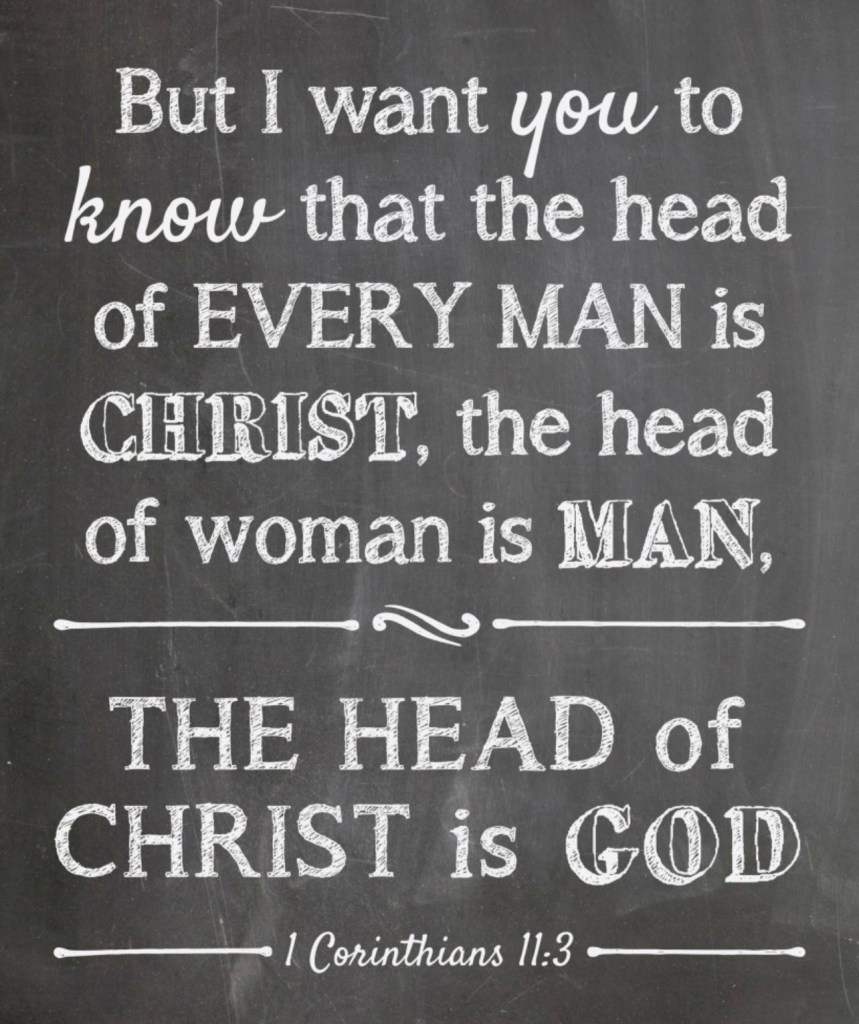
In most well-run families, the male serves as the “head coach or principal” and the female assumes the role of the “assistant coach or vice-principal.” This is not because the guy is smarter at coaching, administrating, or parenting than the gal. It is because the team, school, or family operates better with one identified leader with whom the buck stops.
Logically speaking, a crew needs one true authority person who makes the final decision when a choice is deadlocked. Additionally, it works best to have the father conferring with, receiving assistance from, and deliberating other points of view with a next-in-charge, that is, the mother.
A Christian man in the role of a dad and husband, as ordained by God and confirmed by Catholic teaching, is to be this one head person who assumes familial headship. This does not mean he is to impart dominance over his wife and children as an example of so-called male superiority. Rather, the family expects the man to be the ultimate authority who is rooted in Jesus’s example of humility and self-sacrificing love.
Pope Leo XIII, in his encyclical Rerum Novarum, said:
“A family, no less than a State, is, as we have said, a true society, governed by an authority peculiar to itself, that is to say, by the authority of the father.”
Scripture Tells It Like It Is
These days, many pastors wrongly direct their lectors (aka “ministers of the Word”) to not read the entire passage of Ephesians 5 on the annual Sunday when this is one of the Mass readings. Instead, the so-called politically-correct act is to only read the “shortened” form that purposely leaves out these three verses:
“Be subject to one another out of reverence for Christ. Wives, be subject to your husbands, as to the Lord. For the husband is the head of the wife as Christ is the head of the church, his body, and is himself its Savior. As the church is subject to Christ, so let wives also be subject in everything to their husbands.” (Ephesians 5:22-24)
Priests are worried that their modern congregation will cringe when hearing these words, since today’s culture erroneously assumes that women and men are allegedly equal in every way. Supposedly the idea is to simply pretend Saint Paul never wrote these purportedly archaic verses. However, Paul’s words are still applicable today. They are not promoting sexist inequality, but are preaching the truth and wisdom of complementarianism as found in the marital union. “Complementarianism” is the reality that men and women have different but complementary roles and responsibilities in marriage and family life.
In St. Paul’s Letter to the Ephesians, he instructs husbands to love their wives as much as they would love themselves. In fact, Paul no less than four times in a span of nine verses declares that husbands are to love their wives. If one loves his wife as himself, he treats her as one who is 50/50 important in their union. The male headship is about love and sacrifice, and the female deference is about accepting this ordered relationship out of love for God.
What the complementary relationship is not about is for the husband to dominate and control the wife like a tyrant would oppress his subjects. Likewise, it is not about the woman to mindlessly do whatever the man arbitrarily tells her to do.
If one rejects the part of Paul’s teaching of a husband’s headship, one must also reject his other part of noting a husband’s sacrificial love for his wife. Unfortunately, the argument often made is that our culture has changed, and the wife no longer needs to be subject to her husband.
A Husband and Wife Share Equal Dignity but Hold Distinct Roles
Sacred Scripture advising wives to be subject to their husbands is not claiming that men are naturally superior or that women are naturally less talented. The wifely role of submitting to the husband has been a divine command from the beginning of human creation. We read in Genesis how God created man first and then made a “helper” for him. The Creation story reveals that a husband must complement his wife (“complement” with an “e,” not to say he mustn’t also “compliment” her with an “i”).
This Genesis story was repeatedly handed down through history to explain the partnership of the two sexes and that one is first and the other second. God could have chosen to create the male and female at exactly the same time, forming the man with half the dust and the woman with the other half, and then simultaneously breathing life into both their nostrils. Yet, our Creator chose to first have a “head coach or school principal” and then to add an “assistant coach or vice-principal.”
God created the perfect complementarianism. He made males and females able to physically join as one, each bringing a unique contribution to the reproductive act. Furthermore, He also made moms and dads special in each bringing a unique personality and distinctive talents in parenting their family. Fathers and mothers were purposefully created so the different roles of the two sexes could combine to properly develop children.
The theological reasoning for the husband and father to be the head of the family has nothing to do with the female needing to blindly obey or allow herself to be emotionally or physically mistreated. Christians expect the mom to unselfishly offer herself to the dad while acknowledging him as the head of the family. Likewise, we expect the dad to love the mom as much as Jesus loved him when He sacrificed Himself on the cross. God’s Words are not solely pointing out the need for dutifulness from women but are actually emphasizing mutual submission.
A Perfectly Ordered Marriage Guides Two Souls Toward Eternal Happiness
The world often sees the authentic Christian marriage relationship as disturbing or sexist. However, it is really quite outstanding that the two roles of mother/wife and father/husband complement and serve one another in a beautiful way. God created an ordered relationship of a man and women to come together and work hand-in-hand so to be able to help each other achieve the reward of being with Him eternally.
Covenantal, sacramental marriages have a purpose of getting the spouses to Heaven as each partner holds the other’s hand, sometimes in a dragging-manner and sometimes in a carrying-manner – whatever is necessary. And in almost all these cases, it will be the dad’s hand which is the stronger, bigger one and the mom’s hand which is the gentler, fairer one.
 A PRINCIPAL'S PRINCIPLES FOR PARENTING
Leave a comment