
“Imagine there’s no Heaven; it’s easy if you try;
no Hell below us; above us only sky.” (John Lennon)
The famous John Lennon song, “Imagine,” is an example of how the secular culture has no supernatural view, thinks God doesn’t exist, and therefore can’t envision Heaven as real. People with little or no faith see death as terrifying since to them it means the end of everything.
Agnostics and atheists with these perspectives on death and the afterlife are aplenty in society. Regrettably, too many of today’s weak or ignorant Christians do not properly understand the four last things – death, judgment, Hell, Heaven. Thus, they do not want to confront their mortality.
It is ironic that there are some Christians who see themselves as God’s chosen ones, yet they do not like fathoming the only way to finally see God in Heaven. That is, to go through what the world tells them to fear and stay away from – death.
Conversely, truly faith-filled believers who are counter-cultural comprehend that life is but a kind of short test with eternal Heaven the hoped-for reward. Notwithstanding the reality of sadness that will hit their loved ones when they die, authentic Catholics are actually quite joyous when they contemplate the hoped-for future of reaching the most wonderful place of all.
Kids Need Educating and Assurance
But while death holds no horrors for adult believers, for their children death can be a terrifying and sad idea to consider if their parents don’t take the time and care to enlighten them. And this education on death and the three other “four last things” needs to take place sooner than later. Preferably, families will sit down to talk about death, judgment, Hell, and Heaven prior to their first traumatic experience of hearing a family member or other person close to them has died.
Catholic parents can first try this exercise with their children who have yet to comprehend that a euphoric, heavenly afterlife can arise after a woeful death:
- Have your youngsters close their eyes and recall the best party they’ve ever attended;
- Then have them recall the most exciting game they have ever played and the most memorable family gathering;
- Now ask them to bring to mind their favorite music and to think of the most beautiful scenery they love viewing;
- Now tell them that Heaven is so amazing and stunning that if you combined all five of these memories of the unsurpassed, foremost, most memorable, most beautiful events in their life, they still would not add up to surpass the pinnacle specialness of Heaven.
Our perspective on our own death can affect how we live our day-to-day lives. If our children and we understand that God made us so we ultimately could enjoy eternal life with Him, it liberates us to live with more intentionality. We will not waste our time on Earth, and we can approach death with trust and peace as we long to eventually go “home” to be with Our Lord.
Talk to Your Kids about the Cycle of Life and Death
Although the hope for reaching Heaven can bring pleasurable thoughts, it is human for both children and adults to have sorrowful thoughts when we hear about the death of someone we know. That is why it is important for parents to talk openly about the cycle of life and death. The more a child from a young age can perceive that death is a normal part of life, and can understand the spiritual concepts connected with it, the more that the frightfulness of death can be lessened.
When someone close to the family dies, parents will notice sorrowful emotions and grief responses in their children to varying degrees, depending on their youngsters’ ages and past experiences. Most little ones and even some young adults have never experienced anyone close to them dying and have never even attended a funeral.
On the flip side, in my own life my earliest memories are actually of death, as my dad died when I was four. I remember how every Sunday included a trip to the cemetery to “visit” my dad. And since two of my grandparents had already passed by the time I was born, and the other two died soon after my father passed, discussing death and attending funerals had become almost passe by the time I was in elementary school.
Four Fundamental Concepts Regarding Death
To fully grieve and to come to terms with people dying, people must understand some basic concepts about death. Not just young children, but most teens and even many adults struggle with accepting the reality of a death. It would be good for parents to help teach their kids about some of the following basic concepts of death:
- Death Is Irreversible: A youngster in the developmental stage of lacking cognitive understanding will see death as just a temporary situation. So if told her dad died, she might respond with, “When will he be home?” And because of cartoons and video games, even older children may see death as reversible and expect someone who has died to come back to life. It doesn’t help for a parent to explain death to a child of being like someone “sleeping” or “going away on a long journey.” If kids do not think of a death as permanent, they don’t have a reason to begin to mourn. And although mourning is a painful process, it is an essential first step in understanding and accepting that the loss via death is permanent and that death is an inevitable part of life.
- Death Is Caused by Physical Reasons: When children experience the death of a family member or friend, they must understand the real reason the person died. Otherwise, they might come up with their own made-up explanations which can cause guilt or confusion. When explaining a death, parents should aim for a brief explanation. Use simple yet direct language and watch for children’s cues that they need further, more detailed (yet not graphic) explanations.
- It Will Be Sad at the Moment to Hear About Another’s Death but God Will Help Mourners to Be Happy Again: While affirming to your children that it is natural to feel sad to lose someone who was a part of your life, explain how God helps us to be happy again in due time. He provides the possibility in the future for us to be together again with our loved ones in Heaven.
- God Will Help the Person Who Is Dying: A fear children often have is that dying will physically hurt. Parents should validate this fear, while allaying it by noting many people die comfortably. And for those in pain, God will be there to help, not allowing more agony than one can bear. Plus, it can be encouraging to little ones that although we don’t know when others or we ourselves will die or how painful it may feel, we can trust our Heavenly Father. He is the one who decides when people die and always take care of them. Not only did God the Father experience the death of His Son, but so did Mother Mary, and with both understanding our emotions they help comfort us.
Utilize the Works of Mercy
A tangible way for parents to educate their young ones about death is to use some of the Spiritual and Corporal Works of Mercy as examples and aids. The applicable Corporal Work of Mercy is bury the dead.
Of course, you won’t be able to literally give children shovels, but the funeral Masses at one’s parish are typically public Masses that appreciate parishioners attending. Explain to your children that funerals give the family and friends of the deceased the opportunity to grieve. Attendees show their support during this difficult time by joining in prayer for the dead person’s soul. Another option is for your kids to make sympathy cards for the deceased’s families in your parish. Simply drop off the cards at the parish office to be forwarded to the families.
When I was a Catholic school principal, we had a tradition that our eighth graders would assist at the funeral of a parishioner held during a school day by forming an “honor guard.” Students formed two lines, one on both sides of what would end up being the recessional route upon the conclusion of the funeral Mass. Students lined up from the back of the church through the vestibule and out the doors leading to the hearse in the parking lot. Wearing their sharply dressed school uniforms, our students stood at attention as the funeral party and rest of the congregation recessed past them following the casket.
The funeral attendees deeply appreciated this solemn show of respect for the dead. The added blessing was this act of “helping” bury the dead exposed our students to the concept of death. Most of them had never attended a funeral prior to the eighth grade.
It can feel uncomfortable to put into practice the Spiritual Work of Mercy, comforting the sorrowful. When you become aware of the death of someone your family knows, take this opportunity to converse with your kids. Discuss what would be consoling words and actions toward heartbroken friends or relatives.
For example, if a woman has a miscarriage, she doesn’t want to hear, “You’ll have another baby.” Just being open to listening to her and being present to her will be more comforting than saying something wrong. Perhaps your kids can make a sympathy card for the mourning person, or with your youngsters assisting you can make a home-cooked meal and deliver it to the family of the deceased, opening up the opportunity for a brief talk with them.
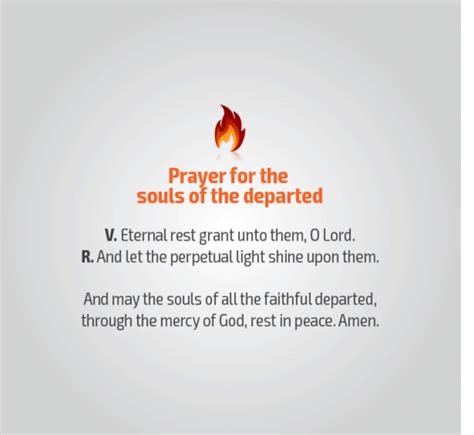
Another Spiritual Work of Mercy is praying for the dead. This is similar in difficulty to comforting the sorrowful if one does not have much experience with death-situations. Many people do not know why we pray to the dead, let alone how to go about praying for them. The Requiem Prayer is commonly said at a Catholic funeral:
“Eternal rest grant unto them, O Lord, and let perpetual light shine upon them. May the souls of the faithful departed, through the mercy of God, rest in peace.”
The Requiem Prayer is not restricted to funerals, however. For example, if your children’s grandparents are deceased, recurringly recite this prayer as a family.
The forthcoming Part 2 of “Help Your Children Understand Death” will continue discussing what, why, and how Catholic parents can teach their kids, delving specifically into the concepts of Hell and Purgatory.
 A PRINCIPAL'S PRINCIPLES FOR PARENTING
Leave a comment