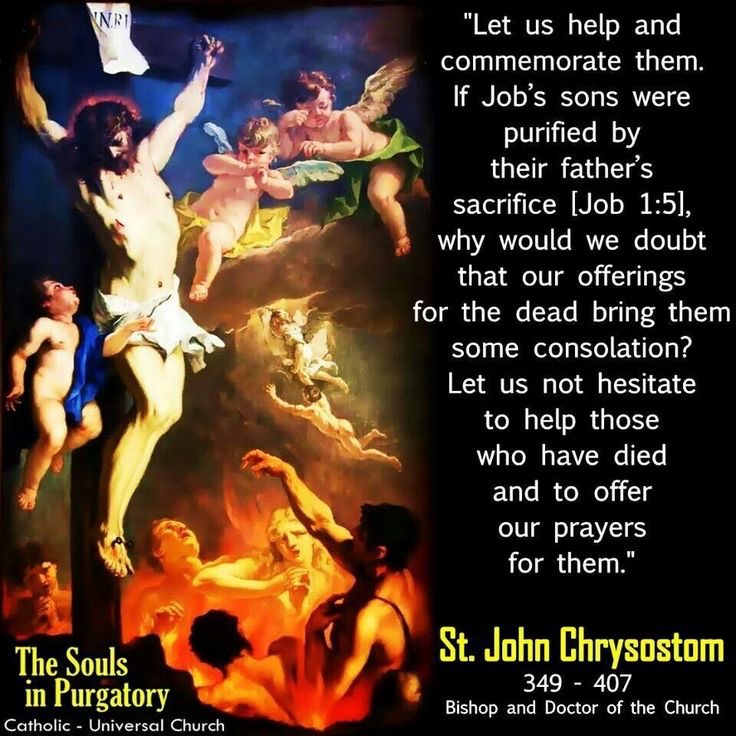
Catholic parents who allow their children to believe this falsity that everyone goes straight to Heaven after they die are actually insinuating that Jesus is a liar. Plus, these moms and dads will have difficulty in the future convincing their youngsters that praying for the deceased and repenting of our sins are essential.
The previously published Part 1 of “Help Your Children Understand Death” discussed how parents can help explain the concepts of the life cycle, dying, and Heaven to their kids. Unfortunately, most current-day Christians, including many ignorant Catholics, believe that immediately after death all people go directly to Heaven except for the rare exceptions such as Adolph Hitler, Ted Bundy, and Judas Iscariot.
Scripture Doesn’t Lie
Jesus Himself stressed that Hell was the culminating place where the majority of people would end up after death.
[Jesus said:] “Enter by the narrow gate; for the gate is wide and the way is easy that leads to destruction, and those who enter by it are many. For the gate is narrow and the way is hard, that leads to life, and those who find it are few. …Not everyone who says to me, ‘Lord, Lord,’ shall enter the kingdom of heaven, but he who does the will of my Father who is in heaven.” (Matthew 7: 13-14, 21)
It is wrong to deny the truths God revealed in the Old Testament about the reality of Hell and that Jesus confirmed later in the New Testament. It is a Biblical fact that a large number of people go to Hell. Catholics have traditionally been taught that the “Four Last Things” are death, judgment, Hell, and Heaven. The first two are definitely happening to everyone; and as for the latter two, one or the other will undeniably occur.
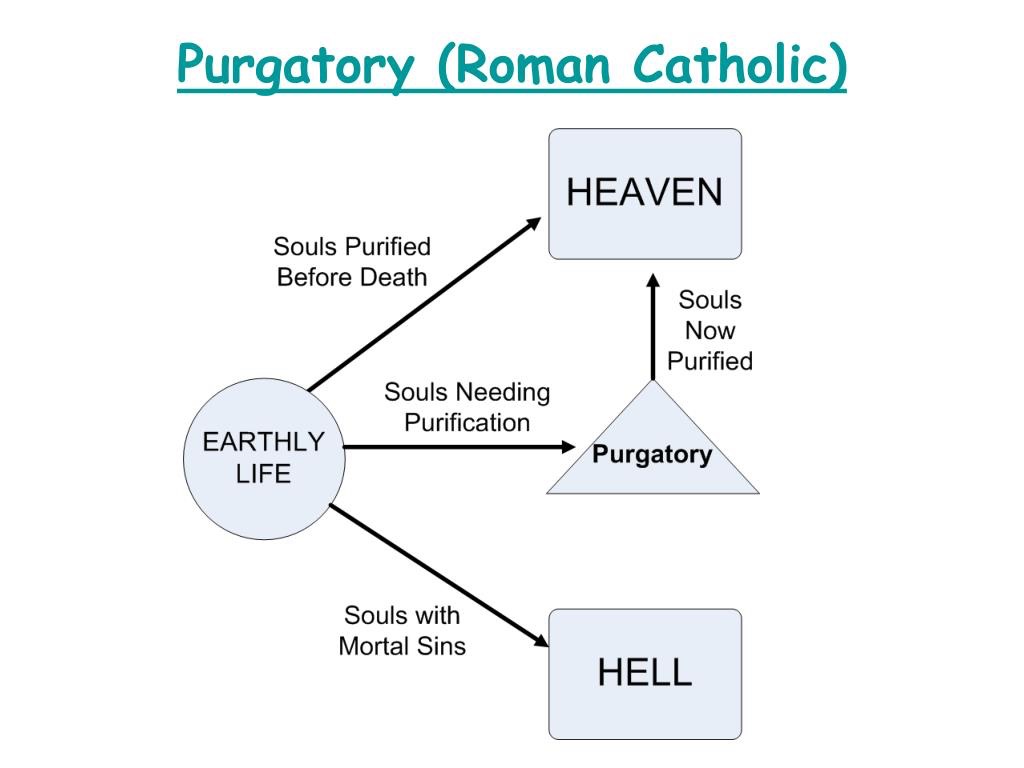
The Catechism states, “Those who die in God’s grace and friendship and are perfectly purified live forever with Christ [in heaven].” Conversely it states one who dies in mortal sin without repenting will forever be separated from God in a place called Hell.
“The teaching of the Church affirms the existence of hell and its eternity. Immediately after death the souls of those who die in a state of mortal sin descend into hell, where they suffer the punishments of hell, ‘eternal fire.’ The chief punishment of hell is eternal separation from God, in whom alone man can possess the life and happiness for which he was created and for which he longs.” (Catechism 1035)
Hell Is Real and Heaven Isn’t Guaranteed
The existence of Hell was a commonly held belief by Catholics up until around modern times. Unfortunately, too many of today’s generation of Catholics are not hearing this dogma preached by lukewarm clergy. Or they are actually hearing a false, counter narrative that the existence of Hell is hyperbole.
There is a blind sentimentality that causes many Christians to believe the deceased are in Heaven no later than the morning of their funeral. It is far wiser to consider the probability a loved dead one will not get to Heaven immediately, is currently in Purgatory, and desires our prayers. Church doctrine states:
“All who die in God’s grace and friendship, but still imperfectly purified, are indeed assured of their eternal salvation; but after death they undergo purification, so as to achieve the holiness necessary to enter the joy of heaven. The Church gives the name Purgatory to this final purification.” (Catechism 1030–1031)
Purgatory Is Biblical
Saint Paul in Sacred Scripture confirmed the existence of Purgatory. He explained how something happens after bodily death that causes our spirits to be made perfect:
“According to the commission of God given to me, like a skilled master builder I laid a foundation, and another man is building upon it. Let each man take care how he builds upon it. For no one can lay any foundation other than the one that has been laid; that foundation is Jesus Christ. Now if anyone builds on the foundation with gold, silver, precious stones, wood, hay, straw — the work of each builder will become visible, for the Day will disclose it, because it will be revealed with fire, and the fire will test what sort of work each has done. If what has been built on the foundation survives, the builder will receive a reward. If the work is burned up, the builder will suffer loss; the builder will be saved, but only as through fire.” (I Corinthians 3:10-15)
During one’s lifetime, some of a person’s works will have been good and some will have been bad. Fire will reveal these works after death. As God burns up the bad works, the person will suffer since the works are part of the person.
We know this cleansing fire which saves the person does not take place when the person is in Heaven. Heaven would not allow in any imperfections that need to be burned up: “Nothing unclean shall enter Heaven.” It cannot be Hell where souls have no hope of being saved.
So where, what, and when is it? Catholics call the part of the judgment of the saved where imperfections are burned up, or purged, “Purgatory.”
Many view Purgatory as an undesirable place and situation. But authentic Catholics are elated about its existence. Making it to Purgatory means they are certain they will ultimately reach Heaven. Hell will be off the table!
Purgatory Is a Gift
Perhaps a more uncomplicated way to explain Purgatory to children is to use tangible examples such as the following involving a car accident, a broken window, and a king:
- If a teenage girl drives erratically and crashes into someone’s car, she will owe money to both pay a fine and to help the person fix their car. After doing this, the court and the other car owner will have forgiven the teen’s debt, but she still has a banged-up car of her own to now have to figure out how to repair.
- Or imagine a young boy ignoring his parents’ previous warnings to not play baseball close to the house. If the youngster ends up hitting a ball through the house window, he will need to apologize and pledge to not do it again. Mom and dad will forgive him. But he will probably have to do extra chores so to be able to earn money and help pay for a new window. And until the backlogged glass repair company finally arrives to the house, the boy and his parents are going to be constantly reminded of what happened as they stare at the plywood-covered window.
- Take the example of a family visiting England and being personally invited to visit King Charles. Before arriving at his palace to greet him sitting on his throne, you would want to wash up first, dress in your finest, and be on your best behavior. In a similar manner, we would be thrilled to achieve the fullness of communion with God in Heaven. But prior to this meeting, we would want to “wash up” – to be cleansed and purged of our sins and bad works in Purgatory.
Purgatory is a gift to repentant sinners from God. He desires for us to attain Heaven. Since Heaven is for those who are not just free from sin but cleansed from any attachment to sin or unpaid debt, Our Lord helps us through a layover in Purgatory to clean our souls from the damages we did to them by our sins.
Many parents assume their kids need the security of believing a loved family member immediately reached Heaven the second he or she died. Instead, these parents should consider how removing the blunt possibilities of Purgatory and Hell risks their children never taking seriously the necessity of reparation for sins. Kids must learn the necessity that one’s soul must be impeccable before it meets God forever in Heaven.
Too Many Funeral Services Get It Wrong
It is a commonly held belief these days that most people will go straight to Heaven after they die. Rather, since Heaven has a very high standard, most will fall short of reaching it immediately. In fact, many will fall short of ever reaching it. That is why we should be grateful for Purgatory. We should feel relieved of an opportunity to cleanse our souls. Purgatory allows us a temporary juncture so that we can eventually enter Heaven – the place and condition of perfect supernatural happiness.
Funeral Masses over the past half-century have transformed to be “a celebration of the life” of the deceased and to help comfort the deceased one’s family. However, a funeral’s foremost objective should always be to pray for the deceased, should their soul be in Purgatory. Catholics should save the “celebration of life” ceremonies for wakes at bars and receptions at home, and have the funeral Masses at churches focus solely on our opportunity to offer up powerful prayers for the repose of the souls of the deceased.
Our Lord Will See Us Through
Parents would do well to make sure their children understand how we must have faith in God’s infinite mercy, have faith in His plan, and have faith in His will. We can take comfort in knowing that God will give us the strength and the grace we need to handle even our most difficult situations. This includes when a loved one dies or when we ourselves are on our own death bed. Even with the gifts of strength and grace, these situations will not necessarily be easy. But at least with God’s help we will not find ourselves in unbearable physical discomfort or unendurable emotional pain.
As parents discuss the topic of death with their children, they should reassure that they will be able to get through the sadness of the loss of a loved one. Authentic Catholics will be able to handle their own eventual deaths because they always turn to Jesus. Drive Jesus’s words in Matthew 11:28 into every family member’s head:
“Come to me, all who labor and are heavy laden, and I will give you rest.”
 A PRINCIPAL'S PRINCIPLES FOR PARENTING
Leave a comment