
Homeschooling, homemaking, and homesteading obviously have the word “home” in common. But what they also have in common are they represent three different yet similar lifestyles for modern Christians as they raise their families.
There is a reason why “Home is where the heart is” and “There’s no place like home” are long time, popular maxims. Making the home the center of one’s life represents a simpler, safer, and more meaningful way to live.
That is why homeschooling, homemaking, and homesteading have cycled back from their prominence some generations ago to being something that more moms and dads nowadays are considering moving back to.
My grandparents and younger people’s great-grandparents did not call what they did back in the day “homeschooling,” “homemaking,” or “homesteading.“ They just called it “living.” The only options generations ago for living and surviving day-to-day were to teach each other, work all day around the home, and be self-sufficient by relying only on yourself and God.
Let me go through these three basic “home remedies” for living a simpler, safer, and more meaningful lifestyle. You may not be able to jump into all three at this time, but I strongly encourage you to consider tackling at least one of these “home remedies” this year. Engaging in homeschooling and/or homemaking and/or homesteading will certainly enrich your life and raise your self-worth. Engaging will also bring your family closer to the type of living in which parents and children were created to partake.
Homeschooling
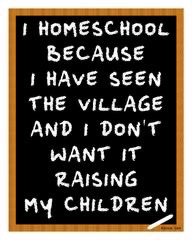
The schooling system as we know it is about 200 years old. Prior to that time, Americans, as well as many other countries’ families, simply taught their children at home. Industrialization changed the way people work. It also changed the way to teach youngsters. Universal, institutionalized schooling with dozens of students sitting at desks all day under a teacher’s rote, one-size-fits-all instruction created trained, agreeable future factory workers. This link provides a brief but clear explanation of the origin of the modern school system.
I was part of this modern school system, having spent 55 years studying in, teaching in, and administering in the Catholic school system. But while I have this long-time connection with formal education, these days I strongly urge families to consider homeschooling instead of enrolling their children in a conventional school.
First off, let’s get one thing straight. Except in rare occasions, no Catholic or Christian parent should enroll their children in a public school. Read “Public School Parents, What the Heck Are You Thinking?!” for a list of countless reasons to avoid public education.
As for enrolling your kids in a Catholic school, note that there is a developing crisis in Catholic education in that many parochial schools have lost their way. You can refer to two previous articles – “How Is Burger King Like a Catholic School” and “Can Your Catholic School Check Off Everything On This List?” – to help you determine if your local Catholic school is a good choice or not.
Authentic Catholic parents are searching for a school environment that is faithful to Catholic teaching, conservative in policies and programs, and is willing to swim against the current cultural tide. The only way to be 100% assured that your child’s educational experience will adhere to Catholic doctrine and follow a worldview that exactly matches your family’s values is to homeschool. When you homeschool, you are setting up your child with a teacher who will be of the same mind (literally) as you, and with a principal (again that’s you) who chooses the perfect course curriculum.
Moreover, when the big talk in education is to meet the unique learning needs of each student, no type of schooling has the ability to customize education to a particular child better than homeschooling. Who better at knowing when and how to fuel a child’s passion for a specific subject matter than that kid’s own mom and dad? Who better than mom and dad at immediately recognizing their children’s frustrations and thus being able to spontaneously pivot to change subject matter or go outside for a break of playtime?
Thanks to both the internet and a rapidly growing community of homeschooling parents, homeschooling resources and courses are easily accessible and often cheap or free. Hybrid classical/homeschool models exist where children meet a couple days a week to learn together. Like-minded homeschooling parents living within driving distance can even “trade skills” by teaching specialized lessons or higher-level subject matter to other families’ kids. Additionally, numerous homeschooling courses are available in print or virtually, and curricula for all grade levels are plentiful.
There is a myth that homeschooled kids didn’t socialize enough and thus do not learn proper social skills. The truth nowadays, however, is that socialization in many schools means connecting with peers who are into drugs, sexual deviancy, and anti-God ideologies. Regardless, there is an increasing number of opportunities for homeschoolers to socialize by working on school projects with other homeschooling peers, attend daily Mass together with other homeschool families, and participate with peers in athletics, fine art programs, and parish events.
A further upside of homeschooling is that of 45 peer-reviewed studies on the performance of homeschooling, 78% found that the homeschooled students performed significantly better than their conventional or institutional school peers not only in academic achievement, but also in their social and emotional development, and future success both at college and into adulthood.
Finally, there are the add-on benefits a homeschooling family receives, such as the capacity to vacation when others are in school, the “authority” to take off random days when the weather is perfect for a hike, and the ability to turn the building of a backyard birdhouse into a math and science lesson. A great joy of homeschooling is that learning happens both intentionally and unintentionally through structured and unstructured times.
There are often two primary excuses parents will give when asked why they aren’t homeschooling their youngsters. One excuse is they don’t think they have what it takes or know enough to homeschool. Moms and dads who aren’t sure they can be a successful homeschooling educator need to realize that homeschooling is basically “parenting.” They homeschooled their child all through his or her toddler and preschool years, teaching their little one how to walk, talk, potty, color, count, read, run, ride, jump, negotiate, share, and wait-a-turn. They don’t have to stop homeschooling just because their kid reached the arbitrary age of five that the educational systems have declared is when everyone must start institutionalized school.
The most common excuse families will give on why they can’t consider homeschooling is they can’t afford to have one parent stay at home and forego their current double-income. Whereas this financial-aspect challenge is going to be tough, current homeschool families have overcome it by tightening their belts and forgoing excessive things they previously spent money on, from extravagant vacations to newer cars. Plus, they realized they no longer had the expense of childcare or private school tuition. While it will be a sacrifice, the benefits of homeschooling undoubtedly outweigh the alternative option of public schooling, and in many instances are superior to a Catholic school.

Homemaking
Just as modern custom is to enroll children in an institutionalized school system, modern custom also expects mothers to join the fulltime workforce so to have dual-income families. The sexual revolution and radical feminism movement which were in full force by the end of the 1970s brought about a dramatic change in American households. The number of families in the United States in which both dad and mom worked outside the home doubled from about 21 million in 1970 to about 41 million in 2019, or from 25% of families to 61%.
This whopping increase in moms working outside the home not only had a significant impact on the way families lived, but created a culture where “housewife” became a derogatory word. To be a housewife was patriarchal and demeaning.
However, the overwhelming majority of families lived in this homemaker arrangement from the recording of history until the latter part of the last century. Up until about 50 years ago in America, approximately 75% of families had a husband/father who worked full-time outside of the home and a wife/mother who worked full-time inside the home and around her children.
Mothers who choose the homemaker vocation and adopt the traditional formation of the father being the breadwinner still contribute a financial value to the family. The mom not working outside the home is crucial to the family’s finances by making a substantial contribution of skills that save her family money – from home-schooling to child-care to housework to homecooked meals.
Homemakers may not have the “breadwinner ribbon” affixed to them, but they still find fulfillment in the hard work they do. They add a positive value to their children’s development and well-being. The homemaker vocation has an extensive job description – from cooking to cleaning, from budgeting to purchasing, and from school and church volunteering to family event planning. Homemakers do so much more than the oft-used but less encompassing term, “stay-at-home-mom.” They are chefs and nutritionists, child psychologists and medical advisors, teachers and educational specialists. They shape a family. They partner in raising children. They make a home.
More young children than any other era are passed along from daycare to school to after-school activities to latchkey isolation because of so many mothers in the workforce. This has resulted in the parents not being the ones raising the kids. Babysitters and after-school care workers try their best, but they are no match for the love, nurturing, moral development, and concern that mom and dad provide their children. The negative outcomes of moms working full-time outside the home is that their children are worse off as evidenced by increases in children’s obesity, sexually transmitted diseases, mental health problems, and use of psychiatric medication.
Since the beginning of the human race, mothers have been the main caretakers for young children. For the most part females are naturally more nurturing. Males, on the other hand, were made to be providers. For the most part, they are naturally more competitive and physically stronger. God created these distinct, complementary differences of females and males.
The Catholic Church calls this “complementarianism” – the belief that men and women have separate, though equal, roles in marriage and family life. The word “complementarianism” derives from the word “complement.” Just like complementary colors work well together to create beauty, males and females complement each other for a more beautiful whole. God created men and women to unite in one flesh, to exist for the other, and to work together for both their good and the good of their offspring. Radical feminism does not recognize or appreciate the purposefully designed gifts of both sexes, but instead aims to eradicate gender/sex roles. Thus, it cannot be endorsed by authentic Catholics.
God created the family unit, and our godless culture sees as its job to destroy our Creator’s beautifully design. It is not just radical feminism. Many school systems have plotted ways to deny notifying parents if their child got an abortion or if their child is so-called gender transitioning. The homemaker is the first line of defense against the family’s enemy. What a critical and significant role!
As a homemaker, the mom is the family member predominantly responsible for forming her children into little disciples and helping them grow up counter-culturally. She is able to spend a considerable amount of time training up her youngsters’ minds and souls. If mom spends 40 hours a week outside the home, she will have to turn over the training up of her kids’ minds and souls to potentially unprincipled daycare workers, corrupt educators, and demonic immorality beaming through their screens and electronic devices.
Homesteading
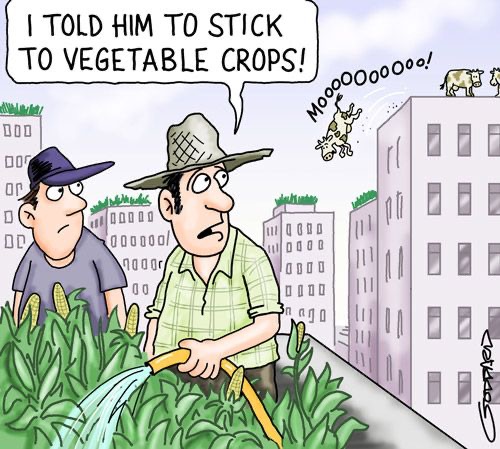
You don’t need acreage to be a homesteader. You don’t need to own a barn and animals. Heck, you can homestead as someone living in a city apartment. Homesteading is a state of mind. It is choosing to become more of a creator and less of a consumer.
A homesteading family is a family who chooses to live a more intentional and self-sufficient lifestyle. They embrace a homesteading mentality, which translates to wanting to learn skills, tackle projects, and stay local-focused.
These are just a few of the actions that a family can take if they want to start homesteading:
- Learn to cook from scratch or bake sourdough bread or can fruits and vegetables;
- Shop farmers markets for local goods and produce;
- Form a relationship with a local farmer to directly purchase milk and/or meat from them;
- Make soap or candles or cheese or cleaning supplies or herbal remedies;
- Learn to crochet or sew or woodwork or fix any mechanical problems around the house;
- Make your own broth with beef bones or chicken parts;
- Grow tomatoes or peppers or lettuce or strawberries or flowers.
Whether you have lots of land or no land, you can be a homesteader by growing some of your own food. Most people would find it impossible to grow on their own all the food they need. But they can certainly cross at least one item off the grocery store list by simply throwing some seeds and soil in a few pots on the patio or deck. You actually don’t even need a pot; you can grow food in a bucket!
There is a lot of information online nowadays for how moms and dads can employ vertical gardening, container gardening, or indoor herbal gardening. It allows families who don’t have land for traditional garden beds to still grow berries, herbs, leafy greens, and more. Growing your own vegetables, fruits, and/or herbs doesn’t just save money, it is healthier. You avoid the chemicals and pesticides used on most grocery store produce.
Supporting your local farmers is the next best thing to growing your own food. You accomplish this when you shop at your local farmer’s market or connect with a farmer who directly sells you fresh-off-the-farm vegetables, milk, beef, pork, and chicken. When you make friends with your local farmer, you have a lifeline to clean, healthy, food. You are also supporting farmers themselves, who might just work the hardest and put in the most hours working of anyone you know.
Visiting u-pick farms can also be a way to help farmers. Plus it is a fun family tradition as well as a great way to save money on produce. Your kids will get excited about eating healthier foods when they are part of touching and picking the fruits and vegetables for themselves. Homesteading parents who take their youngsters u-picking are exposing them to healthier options, the fun of choosing delicious whole foods, and the benefits of being outdoors. Perhaps the best part is that the family can bring home their u-pick fruits and vegetables to then spend quality time together in the kitchen creating meals from the food you all hand-picked yourselves.
Canning and preservation skills were essential for long-ago homesteaders to be able to live through the winter when they had no fresh crops to harvest. For today’s modern homesteader, it might not be a matter of life or death, but canning and preserving are definitely rewarding. If you have never done it, it might seem intimidating but it requires no special skills.
Congratulations for Engaging in One or More ‘Home Remedies’
To you parents who have elected to homeschool your children, congratulations on choosing a school “system” which gives you authority over curriculum decisions, presents opportunities for individualize instruction and flexible scheduling, and allows you to continue teaching your children just as you successfully did in their toddler years.
To you mothers who have elected to be full-time homemakers, congratulations on choosing a vocation which gives you authority over daily family decisions, presents opportunities for creativity and nurturing, and allows you to use your God-given feminine gifts directly for the good of your spouse and children.
And finally, to you families who have elected to create a homestead, no matter how small, congratulations on choosing a lifestyle which gives you great feelings of self-satisfaction and accomplishment as well as knowing you are helping the environment, helping farmers, and making your family healthier.
 A PRINCIPAL'S PRINCIPLES FOR PARENTING
Leave a comment