I grew up in the 1960s and 70s when a boy’s life after school hours and on weekends consisted of riding bikes around the neighborhood or shooting hoops at the local playground. Playing outside was not only the norm for us in the Baby Boomer generation, but we would ride our bikes blocks (or often miles) away from our neighborhood until it got dark and we realized we should head home if we wanted dinner. With no cell phone in our pocket for mom or dad to keep an eye on us or text us to come home, and no internet, computers, or video games that kept us safely anchored indoors, it’s surprising we kids of that era even survived, right? The fact that we had only two electronic devices available – the AM radio and the lone family TV (the only “screen” in the entire home) – is quite shocking for today’s kids to comprehend.
Fast forward a generation to when Millennial generation kids growing up in the 80s or 90s also played outside a lot, but not as much as my generation since kids at the end of the 20th century got to experience the introduction of technology for children to play at home. Of course, it wasn’t too enticing for youngsters to spend hours at a time glued to a video game back them, as the primitive computer game, Oregon Trail represented the budding game industry. But similar to my time, those who grew up 30-some years ago still didn’t have to deal with technology in the form of smart phones flooding the market or video games that were becoming more engaging and sophisticated.
Now we reach today’s Generation Z and Generation Alpha kids – born in the 2000’s – where it has become concerning that youngsters seem to be spending the majority of their free time inside, in front of handheld or laptop screens, and communicating with friends digitally as opposed to face-to-face. It is rare to see children nowadays cycling around the neighborhood or getting a pickup basketball game started down the street.
Of course, one fundamental concern is that the modern generations of children are not getting the outdoor play time that leads to healthier bodies and necessary vitamin D. But the more radical worry is that by replacing the “old-fashioned” type of innocent and non-techy play with the inundation of screen time, social media fixation, internet exposure, and limited face-to-face social-skills-building, we are developing kids with stunted socio-emotional growth and warped minds.
The parents who give their child (of any age – elementary/middle/high school) – a smart phone or a video game console with no firm, constant parental controls are actually hampering the development of their son’s or daughter’s socio-emotional skills. As they are growing, kids need to be helped to develop their communication skills, self-management emotions, and healthy, positive relationships with both peers and adults. Early exposure or overexposure to phones and video games not only stymies socio-emotional growth but leads to poor performance in school, deteriorating relationships with family and friends, and more likelihood of being absorbed into today’s depraved culture.
Let’s start with detailing the problem of too many of today’s parents giving their children smartphones.
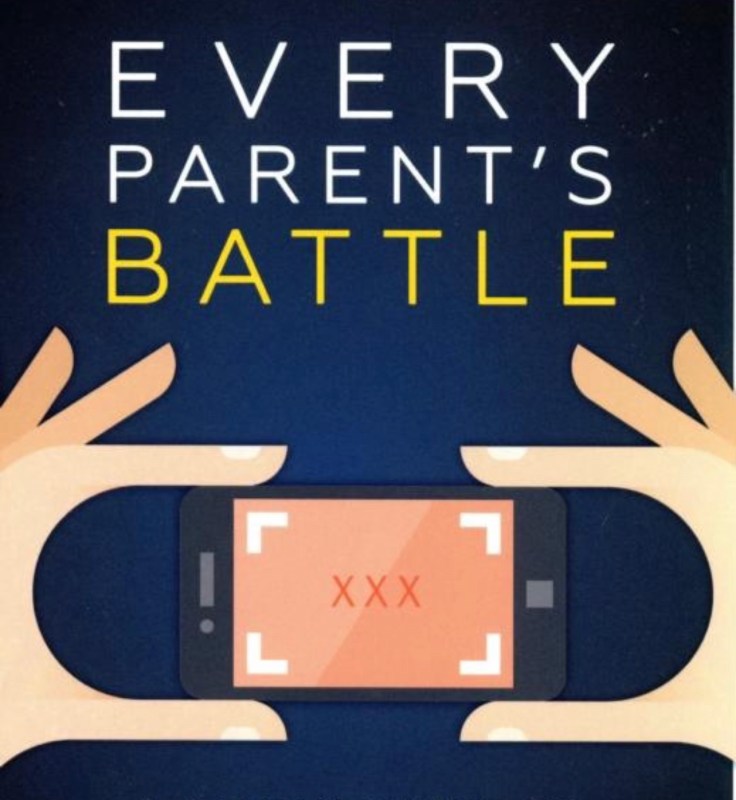
The nationwide average age of children being given their first smartphone is 10. Parents who think they are the “cool” parent by joining in with the Joneses and gifting a phone to their elementary or middle school child are giving the child unsupervised access to a computer that is seconds away from seeing the most offensive and indecent images. These images can never be erased from the child’s memory as they grow up and try to mature in a healthy way. What parents are doing when they give kids phones with access to the internet is giving them X-rated videos to watch on loop.
A 2022 report on teens’ connection with pornography revealed that the majority of 13-17 year-olds have watched pornography online, with many having seen it when age nine or younger. Some discovered it accidentally, but a significant number of teens said they started viewing intentionally on a regular basis at a young age and found they couldn’t stop. What is out there on the internet for today’s 21st century generation is easier for kids to find than my generation who had to settle for sneaking a peek at a Playboy magazine at a store. Even worse, the porn today’s kids view is ten times as disordered as what was out there for 20th century children to view in a magazine.
You will hear parents justify their 4th grader or 8th grader having his or her own smartphone because it provides safety in case the child is away from the parents and needs to contact them. For that case, so-called “dumbphones” can be gifted to the child, giving them emergency contact capability but not capability to access the internet, social media apps, or video games. Other parents will think they are being responsible by putting controls on their child’s smartphone so to hinder the chance that crude photos and videos will be searched for or could accidentally surface. That’s certainly something that should be done when your high school age child will eventually get a smartphone, but it still doesn’t justify why your middle school age or younger child should be gifted with this troublesome device.
Pew Research stated that more teenagers than ever before spend most of the free-time online, mainly on the popular apps – YouTube, TikTok, Snapchat, and Instagram. They are using their smartphones (or computers/devices with internet access) almost constantly whenever they have access, which is a type of addiction, similar to how an alcoholic constantly drinks whenever he/she has access to a bottle.
According to Healthline.com, there are definite similarities between cell phone overuse and behavioral addictions like drinking or compulsive gambling. The similarities include:
- loss of control over the behavior;
- having real difficulty limiting the behavior;
- the need to engage in the behavior more often to get the same feeling;
- feelings of irritability and anxiety when the behavior isn’t practiced;
- relapse, or picking up the habit again after periods of avoidance.
Research has shown that people who overuse cell phones will most likely experience anxiety, depression, sleep deficits, relationship conflicts, and poor academic performance. Preteens and teens already have enough problems as they go through puberty and all the behavioral confusion it brings. Adding this electronic device to their day just makes growing up even harder.
Yes, you may be considered by your kids as the “meanest parent ever” if you don’t give them a smart phone in elementary school or middle school. But speaking as a former school principal and teacher who dealt with student discipline issues for the past four decades, I will nominate you for “parent of the year” if you act counter-culturally and don’t give your preteen or even early-teen a smartphone. Children these days are learning about “sexting;” whereas, my generation took ballroom dancing lessons. Today’s kids text abbreviated, coded messages to one or more friends at a time; whereas, their parents’ generation picked up the telephone to talk in complete sentences. The early exposure and overexposure of smartphone use by youngsters is such an easy problem to fix – if only more parents would grow backbones and act like the wiser, authoritative, impactful adults society expected them to be in all the past centuries.
Today’s society considers parents “overly strict” if they don’t gift their children with smartphones by no later than middle school. Most parents succumb to peer pressure and don’t want to be seen as the mean, old-fashioned parent who won’t purchase a smartphone for their young kids just like “all the other parents are doing.” Might I implore today’s parents to stand firm and not buy your children smartphones until they earn their driver’s license – typically age 16. This will be the age when your sons and daughters not only need more emergency communication access and GPS access, but when they have shown their maturity toward adulthood by training for and achieving their license.
The overuse of cell phones and technology is damaging the generation of kids growing up in the 2010s and 2020s. Besides exposing them to adult material, crude songs, and obscene videos, and besides keeping them from playing outside to help their bodies, too much screen time and cell phone use is creating a generation of children who don’t know how to socially interact properly face-to-face.
So let’s move on to detail the problem of too many of today’s parents allowing their children unsupervised and/or unlimited use of video games.
According to survey results in 2021, teens spend an average of over 8.5 hours a day on entertainment screen use – aka viewing television shows and YouTube videos, playing video games, and/or using social media. Girls more often will be on social media, and boys on video games. The dangers of social media use – especially in regard to cyberbullying and grooming by so-called LGBTQIA2S+ sites – is a concern worth its own article (such as this one). For now, let’s stay focused on the concern of kids being overexposed to video games.
When a child plays video games on a console, computer, or handheld device – similar to when he or she texts, scrolls, and searches on a smart phone – parents must be aware of what the child is doing and determine if excessive time on technology may be affecting his or her schoolwork, family interactions, and socio-emotional functioning.
An argument those in the screen and tech industries will use is that use of the smart phone can be necessary for safety and communication reasons and playing video games can be educational and help kids develop problem-solving skills and resiliency. But the negatives outweigh the positives, as we know these devices not only stunt emotional growth, undermine development of appropriate relationships, and warp minds, but they can become injuriously addictive.
Social media apps that your child may incessantly scroll through to seek validation and attention, or to be distracted and stimulated by TikTok videos and Instagram pics, have created behavioral addictions (as opposed to substance addictions), according to Anna Lembke, the chief of Stanford University’s addiction clinic. She calls the smartphone the “modern-day hypodermic needle” that is picked up and turned off for quick hits. Video game designers purposely create games to be addictive, causing the users to have a difficult time stopping because they get caught in positive feedback loops and reward cycles built into the games.
Mom and dad can tell their child is addicted to video games if he or she spends a large amount of time learning more about how to play them better, or becomes angry or depressed when he or she is unable to scroll/text or play – whether due to an uncontrollable interruption or the parent taking away the phone or game device. In addition, if the youngster’s social interactions seem to have reduced, such as by withdrawing from previously enjoyed in-person activities with friends, or if their kid’s grades are dropping due to excessive time on the phone or game playing, then the child’s usage has reached an unhealthy stage and parents need to decisively act.
“Childhood 2.0” is a fantastic video for moms and dads to watch online together that addresses how differently today’s kids are being raised, and why smartphones and other electronic/computer devices that make up way too many hours of most children’s daily lives are damaging them. I urge you to set aside time to watch this video, not just to be better educated but to be “scared-straight” if what I’ve written so far hasn’t impacted you enough to make a change in how you handle gifting your child with a smartphone or regulating video game playing.
Next week’s article – “Set Boundaries on Your Kids’ Phone & Video Game Use” – will continue this discussion by naming actions parents can take and resources to use for setting limits on children’s use of smartphones and video games. It will also address what to do if – or should I say, when – kids moan and wail about limits being set and how effective parents will apply consequences for improper technology use.

 A PRINCIPAL'S PRINCIPLES FOR PARENTING
I was extremely unpopular with my kids over cell phones. I argued that every kid I knew was always sedentary for a long period of time when they used their phones. This at a time at a phase where their bodies really need movement. My kids knew that “it meant Pop knew that the kids were not exercising or seeing people in-person, and Pop says both of these things are really important for developing minds.”
I pointed out to my kids that most kids use their phones before bed or in bed, which impacts sleep and it makes kids moodier, harder for them to focus, and they do worse in school. Not cool.
Dan Mueller
LikeLiked by 1 person
Great job! Of course — monkey-see-monkey-do — so parents will have an easier job getting their kids to comply with putting away phones if mom & dad do likewise, such as when at the dinner table.
LikeLike