(This is the first in a series of five articles assisting parents in teaching the parts of the Mass to their children to enlighten them on what is taking place and help them develop a deeper understanding of why attending Mass is critical to our spiritual health. Note that the following explanations of the parts of the Mass and our expected responses/actions are written for the most common Mass that Catholics attend in the U.S. – the Novus Ordo Mass – as opposed to a Traditional Latin Mass.)
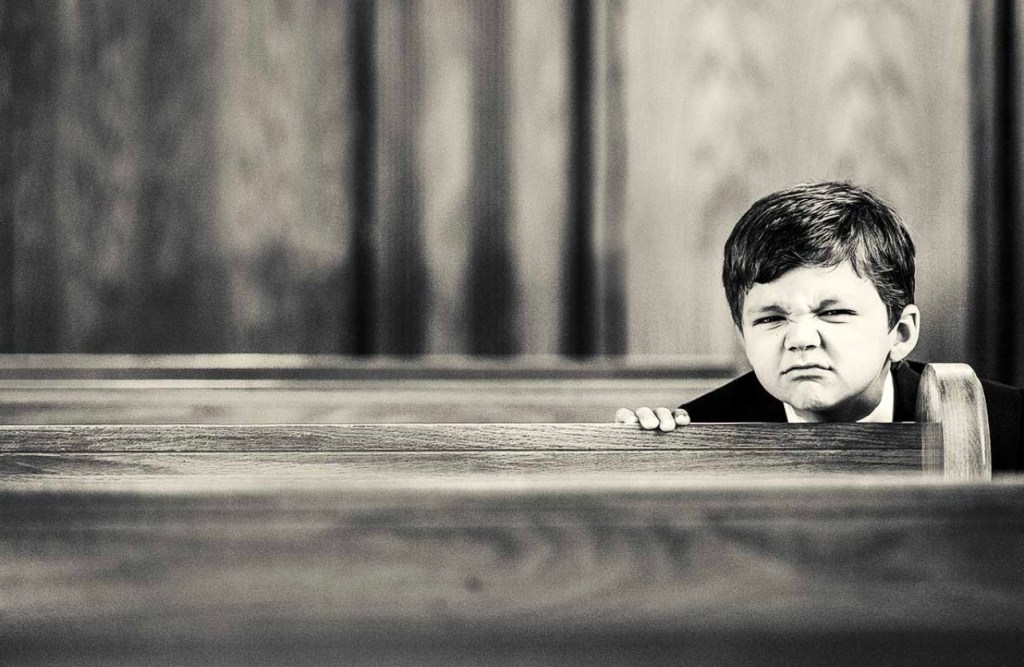
“I’m bored!” is one of the most common complaint parents hear from their kids. Thus, it’s no surprise that the most common reason children give for not wanting to attend Mass is, “It’s boring!” In a way, you can’t blame youngsters for this protest. To people – young or old – who don’t truly recognize what is taking place on the altar and haven’t been taught the meaning behind the various gestures and responses, it makes sense that they would be bored. Children need to know why the whole family needs to go to Mass beyond a basic parent comeback of, “It’s because that’s what our family always does! Now quit stalling and get in the car!”
My wife did not grow up playing or watching sports, so when our son started playing high school football and our daughter started playing select basketball, my wife realized she needed to learn about the sports if she was going to start watching a lot of games. By asking a lot of questions, attending games, and doing some research, she learned all the rules as well as why certain plays were being run. She started figuring out why our son’s football team chose to punt on 4th down and why our daughter’s basketball team applied a full-court press. By understanding the reasons behind players making particular actions, the objectives of the various positions on the field or court, and the situations triggering coaches’ to call certain plays, my wife found she enjoyed watching football and basketball.
In a similar way, if children do not have a clear grasp of what the Mass is and why certain things are taking place, they won’t appreciate going to church. Kids (and even some adults) need to understand the Mass is not a series of random prayers and Simon-Says-like actions of standing, sitting, kneeling, and responding. The Mass is a sacrificial act with a purposeful coherence to its structure and with entire sections of the Mass coming straight from Scripture.
When parents need to explain to their children why they get to go to Mass – as opposed to why they have to go to Mass – they can begin by saying, “The Mass is where we go so the Lord can meet us, feed us, and strengthen us.” Then mom and dad can add that we get to go to Mass so we can give praise and thanks to God, as the word “Eucharist” is Greek for “Thanksgiving.” We also get to go to Mass so we can consume the Eucharist, because just like how our bodies absorb the nutrients in food, our souls can absorb the love of Jesus and become more and more like Him when we eat His body in the form of bread.
But to get kids to truly understand this encounter with Christ, teaching them needs to go into more detail. In the same way my wife needed to learn the specifics of sports, kids need to be taught why certain “plays are called” by the priest and how the people (aka the “players”) are to “take their positions” and respond in words and actions.
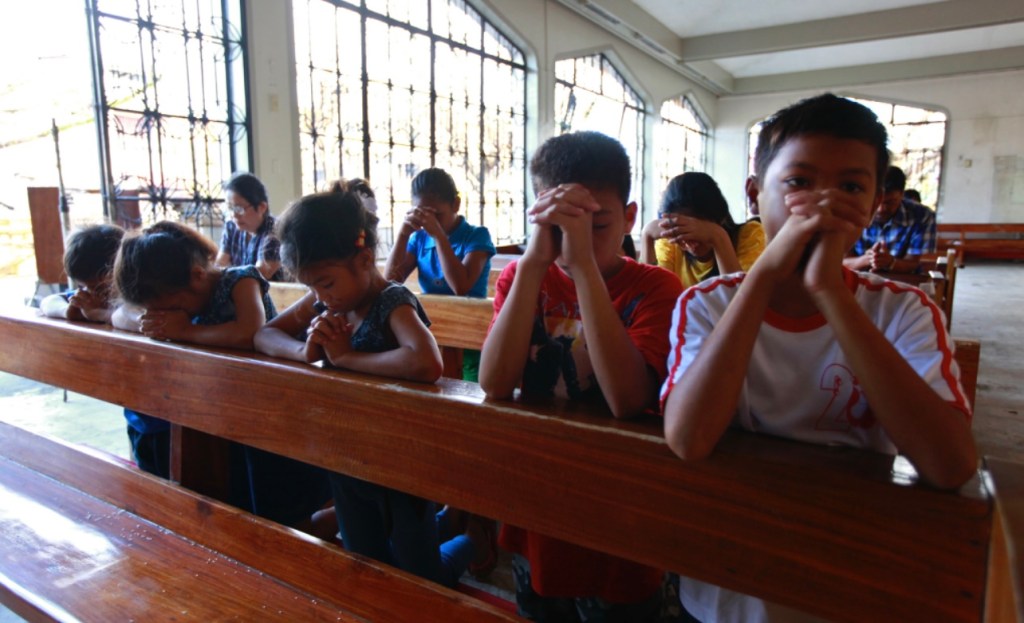
Once little ones have graduated from the toddler years of needing a sippy cup and tangible diversions in the pew to keep them occupied, they should be expected to participate in Mass by performing the proper actions of genuflecting, kneeling, standing, and responding with the appropriate prayers. By the time they turn five-years-old, children can either follow the order of Mass in the Missal or at least be expected to continuously look up toward the altar and pay attention to what is going on.
Just as it would be overwhelming for children to try and learn all the parts of the Mass in one sitting, it is also too much to expect you the reader to sit though one long article of guidance for teaching kids about the Mass. So how to “Teach Your Kids the Mass” is being spread out into a five-part series of information and helpful hints published over the following five weeks. Parents should likewise break up teaching their sons and daughters over a period of multiple weeks, focusing on only one part of the Mass at a time.
The Catholic Mass follows a structured format that begins with the Introductory Rites, followed by the Liturgy of the Word, the Liturgy of the Eucharist, and finishes with the Concluding Rites. Each section has its own distinct elements and rituals that contribute to the overall worship experience. In this first of five articles that assist parents in teaching the Mass to their youngsters, the beginning sections of the Mass will be addressed, and future articles will continue teaching about later sections. My hope is the following information and suggestions will help parents teach their children what to expect during the Mass, why the priest is doing certain things, and what we are to do or say in response.
With their parents modeling, kids should be expected to bless themselves with holy water when entering church and genuflecting toward the tabernacle when entering the pew. Parents can explain to their youngsters that the holy water blessing reminds us of when we were baptized. By making the Sign of the Cross we are asking our Lord to grace us with a cleansed mind and heart as we prepare to meet Him in the church. The reason we genuflect on our right knee is to show reverence and admiration to our Savior, who is waiting for us in the tabernacle. Just like how a knight would get on one knee when approaching the king at his throne, we are approaching the King of Kings, and He deserves this act that shows we believe in His awesomeness.
Before Mass begins, we take time in silence to kneel and ask the Holy Spirit to put us in a proper, peaceful disposition. We prepare our hearts so to more likely receive the graces God wants to give to us. Parents would do well to give their children suggestions prior to this time on what they could do during these few minutes of silent prayer, such as thanking God for the good things that happened during the week and asking Him for special intentions. It is fine to silently say formalized prayers that we have memorized or are written in the Missal, and it is also fine to just have an informal chat with our Lord.
Mass begins with the Introductory Rites, and everyone stands as our celebration begins with singing the entrance hymn as the priest and other ministers (deacon and altar servers) process to the altar. When children want to know why the priest (and deacon) kisses the altar, it can be explained that kissing is a symbol of affection and the altar is a symbol of the sacredness in the Catholic Church. The altar represents the place where Jesus was sacrificed and by kissing it, the priest is acknowledging that he is performing his duties on holy ground.
The priest leads all of us in the Penitential Rite which is when we recall our faults and sins and ask for God’s merciful compassion. This rite includes the priest, deacon, or cantor leading the people in saying or singing the Kyrie Eleison (translates in Latin as “Lord have mercy”). We say, “Lord have Mercy, Christ have Mercy, Lord have Mercy.” An additional form of the Penitential Rite that some priests make sure to include at the beginning of Mass is called the Confiteor, which means “I confess,” as those are the first 2 words of the prayer.
During the Confiteor, we beat our chest three times while saying, “…through my fault, through my fault, through my most grievous fault.” It can be explained to kids that the reason we make a fist with our right hand and strike our chest over our heart three times is to signify our contrition – our regret and guilt – over having sinned. Parents can illustrate that this self-flagellation is similar to how in the olden days grandma and grandpa would have struck a hanging rug repeatedly with a stick to beat out all the dirt. Our sins have dirtied our souls, and we are symbolizing that we wish to remove this dirt and cleanse our souls. A different explanation could be that our fist symbolizes a rock, and sinning is like breaking God’s heart, which is what a rock would do if we truly struck our heart with it.
The Introductory Rites continue as we join together saying or singing a joyful song, the Gloria. Whereas the Penitential Rite asked us to confess our faults as we acknowledge we are sinners in the presence of God, the Gloria acknowledges God’s grand majesty. Parents can point out to their kids a comparison of the opening words of the Gloria – “Glory to God in the highest and peace to His people on earth” – to the Bible story of the shepherds and the angels at the birth of Jesus in Luke’s Gospel account.
The Introductory Rites conclude with the priest praying an Opening Prayer, and we then sit down to transition to the next main part of the Mass – the Liturgy of the Word.
In the upcoming second article of this five-part series, we will continue our discussion of the Mass at this point.

 A PRINCIPAL'S PRINCIPLES FOR PARENTING
Dan,
I look forward to enjoying and learning from you about educating kids regarding the Holy Mass. As a grandparent, I have been given yet another opportunity to improve upon my tactics and sharpen my skills by improving my “teaching plan” for my grandkids.
For my kids, I created a worksheet to teach my kids what is expected from the order of a mass with a sequencing activity. I explained to my kids that mass is a ceremonial thanksgiving to God, and that it involves Gospel readings, hymn singing and the Holy Communion where blessed bread and wine become the body, soul, and divinity of Christ.
My worksheet gave my kids 18 individual aspects what is expected to happen during mass and they needed to place them in chronological order. I know your advice will improve upon what I have and what I’ve done in the past. Thanks, Dan!
Danny
LikeLike