It used to be that our culture encouraged firm yet fair parenting and did not view children as equal to their parents. But in the past few decades things have changed so that nowadays egalitarianism in family relationships is prized by mothers and fathers who try to be their kids’ buddies instead of taking on the proper roles as their wiser and mightier authority figures. Both numerous sociological studies and my anecdotal evidence from 40 years as a teacher and principal reveal that parents who are too permissive with their children cause harm. Children raised by soft and easy-going parents who set fewer rules and strive to be more pal than parent are more likely to develop behavior problems, perform poorly in school, and abuse drugs or alcohol.
This reality about parents’ dominion over their children being the proper and effective role for mom and dad to take has much in common with our Almighty Father’s dominion over us and our relationship with His Son, Jesus Christ. A healthy family unit has a child seeing mom and dad as loving and at the same time understanding this will at times equate to accepting their onerous commands and submitting to a definite hierarchy of wiser, respected authority figures over a dependent. In a similar manner, a proper Christian attitude is to see God as Supreme and Jesus as Our Lord and King.
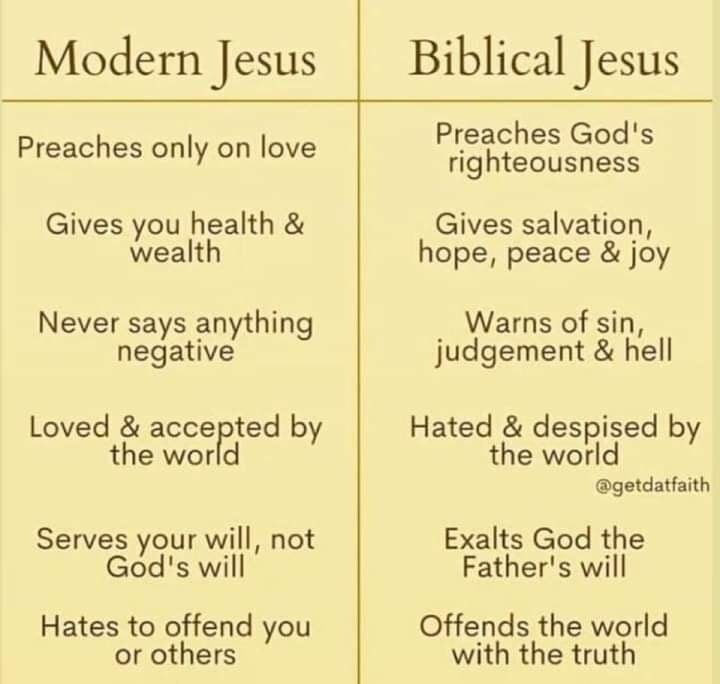
Beginning in the early 1970s along with the Vatican II pronouncements and the misinterpretations of the document which followed came an inappropriate version of Jesus now being the cool, with-it, peace-loving, non-threatening, inoffensive, and non-judgmental buddy. Our Lord might have behaved with friendly etiquette at times, but He was often a threatening, offensive, and judging person when on earth because he desired that people stop sinning lest they will head to hell. Similar to how we know God the Father caused millions to die in a flood and burned down the towns of Sodom and Gomorrah, we saw God the Son wildly smashing and destroying the tables in the temple and at other times angrily calling people “hypocrites,” “blind fools,” “children of hell,” “brood of vipers,” and “serpents.”
The more recent decades also saw many churches replacing their crucified, suffering Jesus on the cross with this “new and improved” version of the risen Jesus on the cross who almost appears to be smiling like a televangelist. We also have experienced “makeovers” of Jesus ranging from this ”Hollywood-like” Jesus who looked cool enough to start making appearances with Elvis and Fonzie, to the Jesus in the movie and play “Godspell,” who literally was depicted as a fun-loving clown.
Children in Catholic schools and faith formation classes have been particularly vulnerable in current times to being fed a watered-down version of Catholicism and specifically a weakened understanding of how profound and wondrous is God the Son. The casual age in which we live markets an inaccurate representation of Jesus Christ as a cool, enchanting philosopher who is made to be more relatable than divine and made to be the best friend we’d like to party with instead of the God we should worship.
Of course we know that Jesus was fully human as well as fully divine, and of course He had friends and was known to both laugh and cry, just like us. But the human Jesus was perfect and sinless; something none of us are. Whereas historical (and Biblical) Jesus warns of judgment and hell and offends the world with the truth, modern, politically-correct Jesus is only positive, preaches solely on loving your neighbor, and hates to offend people.
Just as children who view their parents as their never-offending, always-positive pals will more likely end up making poor choices and suffering bad consequences, so too Christians who view Jesus as their never-offending, always-positive pal will more likely end up sinning. A person who sees the Lord more as an equal and not worthy to be worshipped and instinctively followed will find themselves alienated from God’s grace, will feel isolated and unfulfilled, and will be in danger of temporal pains in the present and perpetual anguish in the future.
Youngsters should be taught to have a reverent awe and incredible reverence to their Lord and Savior. They need to see Christ as the image of a powerful God who became man, died for us, and in doing so restored and saved the whole universe. They should be able to memorize and repeat back the words that Jesus’s highest Apostle said to Him when Jesus asked, “Who do you say I am?” Peter didn’t reply to this question with, “You’re the best friend a guy could have!” He replied with, “You are the Christ, the Son of the living God.” Likewise, parents and teachers need to make sure their little ones comprehend why, when the Apostle Thomas saw Jesus for the first time after His Resurrection, Thomas didn’t exclaim, “What’s up, buddy!?” He shouted out, “My Lord and my God!”
While it is understandable to use “friend” as one reference of what Jesus is to us, since He himself said, “You are my friends if you do what I command you.” (John 15:13), it is important to note that in Biblical times, a “friend” is notably different than today’s “buddy” or “pal.” We need to remember what “friend” means to Jesus compared to what our modern, technological society deems a “friend.”
Nowadays the word has been devalued, as evidenced by how someone can have 1,000 “friends” on Facebook but has never met any of them in person, let alone can prove they are all real people and not some computer-generated bots. The ”friend” Jesus has in mind stands for deep love and fidelity, as the word comes from the Greek “philos,” which means “love.” When we think of Jesus as our friend, we are to think of how He loved us so much that He gave up His life for us. In turn, we reciprocate as His friend when we pledge to loyally love Him by giving up our own ways of doing things and only do things God’s way. We will obey Him, believe Him, and confide in Him. This is what it means to have a friend in Jesus.
Other than this unique, foundational version of Jesus as our “friend,” more often we should refer to Jesus using distinguished monikers we find in Scripture, such as “King,” “Son of God,” “Savior,” “Physician,” “Teacher,” and “Light of the World.” St. Paul wrote of the supremacy of Christ:
“He is the image of the invisible God, the first-born of all creation; for in Him all things were created, in heaven and on earth, visible and invisible, whether thrones or dominions or principalities or authorities – all things were created through Him and for Him. He is before all things, and in Him all things hold together. He is the head of the body, the church; He is the beginning, the first-born from the dead, that in everything He might be pre-eminent. For in him all the fulness of God was pleased to dwell.” (Colossians 1:15-19)
The titles Paul gives Jesus present an exalted view of Christ. When we see Christ, we see the omnipotent, omnipresent, and omniscient God himself. Paul later wrote:
“God has highly exalted Him and bestowed on Him the name which is above every name, that at the name of Jesus every knee should bow, in heaven and on earth and under the earth, and every tongue confess that Jesus Christ is Lord, to the glory of God the Father.” (Philippians 2:9-11)
Like Paul, we should not see Christ as an equal or as a good chum with whom we have a fun relationship. Instead, we should think so highly of Him that we bend our knees to worship Him. That is why one pious practice is for Catholics at Mass to literally make a slight bow of their heads whenever the word “Jesus” is said by the priest or read by the lector. Furthermore, each Sunday we recite the Nicene Creed where we state our Catholic beliefs, and when it comes to our beliefs regarding Jesus, we assert:
“I believe in one Lord Jesus Christ, the Only Begotten Son of God, born of the Father before all ages. God from God, Light from Light, true God from true God, begotten, not made, consubstantial with the Father; through him all things were made…”
Nowhere in the Mass or in the Catholic Catechism do we state:
“I believe in Jesus, my buddy and pal, a non-threatening and inoffensive friend to all.”
As much as we need more children these days to view their parents as decisive, limit-setting figures who love them with authority, so too do we need today’s Christians to view their Lord as someone in whom they can feel loved and secure, yet also someone who is the King of Kings and thus deserving of never-ending praise and unwavering adherence to His commandments.
Instead of lowering Jesus to our level to make Him our agreeable and acceptable buddy, we must raise Jesus to the heavenly, throne-sitting level He deserves and be willing to live a godly live in Christ no matter how hard the secular culture persuades us otherwise.

 A PRINCIPAL'S PRINCIPLES FOR PARENTING


Dan,
Once again you have effectively and succinctly addressed a horrific fault in the thinking of so many in today’s world – especuially when they describe themselves as “Catholic.”
We need to begin with our children. Kids may hear about God’s holiness and wonder, “Why fear God?” Though children often hear about God’s love, they rarely learn about the fear of the Lord. They are largely unaware that God commands people to fear and revere Him. As a result, children show disrespectful, indifferent, or flippant attitudes toward God and have trouble submitting to Him as Lord. We as parents must follow the information you have shared to change these young minds and spirits.
Danny Mueller
LikeLiked by 1 person
Totally agree! Here is a good explanation of “fear” from Catholic Answers:
“Fear of the Lord means awe or profound respect. It does not mean literal fear of God’s power but an awe and respect for the absolute majesty of God. We should “fear” offending God not because of his just punishment but because he is all good and deserving of our love.”
LikeLike