Throughout my 34 years as a Catholic school principal, one item in my job description was to regularly meet with prospective school parents who were checking out our school for possible enrollment. I needed to answer their questions about what our school could offer their grade preschool through eight children, and why it would be worth it to pay tuition when they could simply send their kids to the local public schools.
There were some common questions these prospective school parents would throw at me during the admissions/visitation process. Probably the most repeated question was, “How diverse is your school?” What these visitors really wanted to know but were not candid enough to ask was, “What is the ethnic minority population of your student body?” and “What is the your socio-economic diversity among families?”
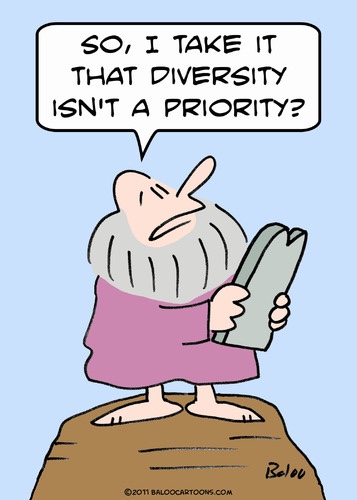
Most school parents in recent years have been led to believe that if schools weren’t diverse in terms of their students’ races and/or their families’ incomes, then these communities must be bigoted, aka bad, and should be avoided. I hesitated making statements to prospective enrollees that touted our school’s so-called diversity, such as, “Only X% of our student body are white” or “We have X% of our families on tuition assistance.” Even though by the politically-correct standard, our school indeed was “diverse” in these areas, I did not like using facts about races and incomes to promote our school. A school’s diversity should not be a factor in why a parent should choose to enroll there.
Parents always looked confused or even upset when my initial answer to their diversity question was, “We do not strive to be a diverse school.” I then needed to clarify my answer to parents. I explained that almost every school measures their diversity in terms of having a higher-than-average ethnic-minority student population and/or by having a varied parent population in terms of family income. But I considered too much diversity in a school a troubling thing. I proceeded to explain the reason why a quality Catholic school should not try to be diverse.
From an educational standpoint, the best way to assure a strong, cohesive student body and a unified school parent community is to accentuate our similarities more than our differences. A Catholic school should never desire a diverse student body. We need every school family to be the same by being either Christian or open to converting to Christianity. We would suffer if some students and parents were anti-Christian, as this would create conflict.
Catholic schools were founded with the objective of educating Catholic students coming from Catholic families. However, non-Catholic but Christian or God-fearing students and families are also welcome to join a Catholic school. In the spirit of evangelizing, hopefully after spending a few years learning about the truth of Catholicism, these non-Catholics will consider joining the Church. The discord occurs when a school enrolls families who publicly clash against Church doctrine and try to change the school’s Catholic identity.
It wasn’t just in our school families’ similar religious beliefs that I proudly would note our school’s non-diversity. Our school also lacked diversity in that our students all were between the ages of 4-to-14 and all were required to look alike. By that I mean every boy had to wear blue slacks and a white polo shirt. Every girl was required to wear either slacks or a plaid skirt and a white shirt. Plus, no child was allowed to color their hair and no boy could have facial hair. The culture would call this a lack-of-diversity in our student body. I would call this reasons why our school community ran so smoothly, calmly, and effectively.
All of these explanations are not to prove diversity is a bad word. After all, as Catholics we marvel at the diversity God used when he created different people, languages, animals, geographies, and plants. But then again, diversity is not a virtue. You won’t find the word diversity in the Bible, in the Catechism of the Catholic Church, or in any of the teachings of the Church fathers or the doctors of the Church. Instead, the term unity is what Christianity preaches.
Saint Paul reminded us:
“In Christ Jesus you are all children of God through faith. As many of you as were baptized into Christ have clothed yourselves with Christ. There is no longer Jew or Greek, there is no longer slave or free, there is no longer male and female; for all of you are one in Christ Jesus. And if you belong to Christ, then you are Abraham’s offspring, heirs according to the promise.” (Galatians 3:26-29)
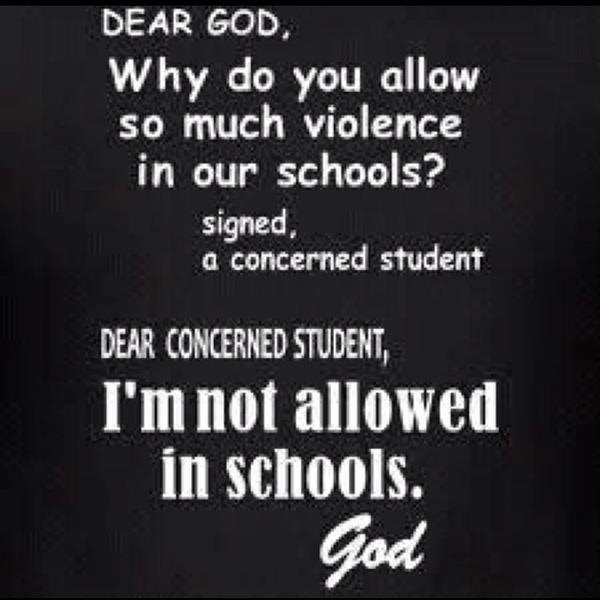
When turning our sights to how diverse is the public school system, you could say all these government-run schools likewise lack diversity. The administrators and school boards are all the same in how they keep God out of their buildings. All public schools are alike by not allowing students to pray and not even mentioning the existence of Christianity in any history lessons. These schools demonstrate their lack of diversity in how all classrooms are free of Bibles on their bookshelves or crucifixes on their walls.
It’s a tough battle for authentically Christian families who enroll their kids in government-run schools that bow to political-correctness but spit at God. Except in those rare, conservative-leaning public school districts in some of the country’s more rural areas, it is near impossible to find a public school that is not just religiously-neutral in their policies and practices but downright anti-Christ.
For any parent who chooses to keep their child in the public system, make sure that you and your young one understand your rights. Be prepared to defend yourselves in situations such as the following which you will most likely encounter in elementary school, middle school, and/or high school.
Public school students have the right to:
• Discuss their faith with other students in informal settings such as the hallway or cafeteria.
• Read their Bibles or religious books at school during “free times.”
• Pray grace before lunch or pray before starting a test – but it has to be a silent prayer.
• Use Christian-themed notebooks and school supplies.
• Wear religious-themed clothing such as garments with Bible verses on them – unless the school has a dress code that doesn’t allow messages of any type on clothing.
• Self-organize and self-lead a Christian-club that meets before or after school on school grounds – as long as the school allows any other types of extra-curricular clubs.
Faithful Christian parents should think twice about enrolling their children in the public school system. They should do all they can to make it possible for their youngsters to go to a Catholic school, a Christian school, or to be homeschooled.
For more information on choosing the best school for your family, check out my other articles regarding Catholic schools and homeschooling.