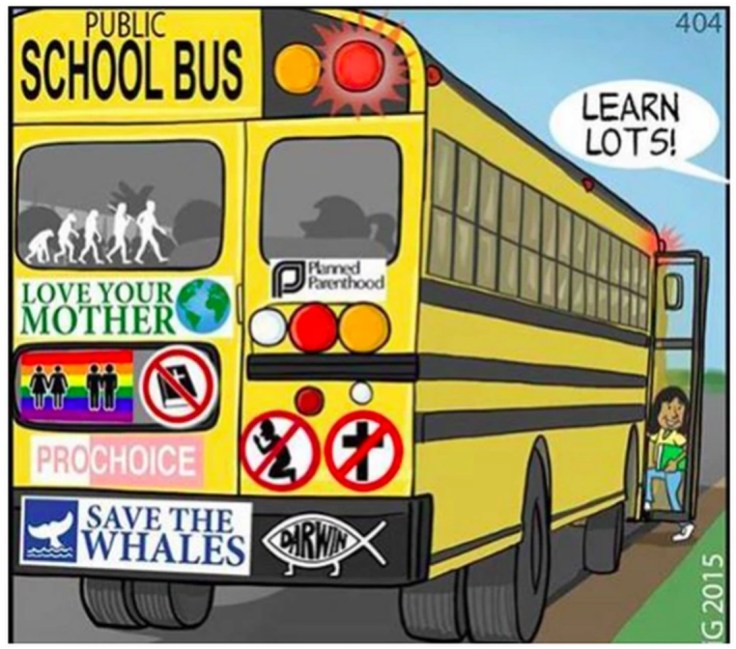
As schools are currently closing out their 2023-24 year, most school-age parents’ minds are now focusing on summer vacation planning. However, it is actually more vital right now that moms and dads plan for the fall, and more specifically decide if the ensuing school year is going to see a change in what type of school their kids attend. Whereas it won’t surprise you that – as someone who spent 55 years studying in, teaching in, and administering in the Catholic school system – I strongly urge families currently in the public school system to get out. What may surprise you is that enrolling in a Catholic school is not necessarily my number one recommendation for families.
First off, let’s get one thing straight. Except in rare occasions, no Catholic or Christian parent should enroll their children in a public school. The rare occasion could be that the family lives in a conservative, rural school district where the name “God” is allowed to be spoken between the school walls, where the teachers are allowed to be their authentic, Christian selves in their classrooms, and where today’s “woke” agenda has not infiltrated the curriculum. But in 99% of public school districts nationwide, their schools are not just inferior but they are growing more evil every year. Examples to prove his include how public school districts are now mandating that so-called “LGBT curricula” be taught, how public schools hide information regarding their children from parents, and how even the official head of all our country’s government-run schools admits that over 80% of public schools are failing to educate students. Further examples of how public schools are havens for indoctrinating impressionable children with perverse and/or unprincipled concepts can be seen here and for daily reports check out the news stories on Libs of TikTok.
It is obvious that the government is often corrupt, dishonorable, and inadequate, as evidenced by everything from politicians’ behaviors to the incompetency of the IRS and the DMV. That being the case, why then would a parent choose to enroll their children in an atheistic school that the government runs when there are other, superior, virtuous options?
One such option is a parochial Catholic school. There are some dioceses where their schools are wholeheartedly following the historical mission of Catholic education of promoting strong academic learning woven with solemn religious and moral formation. But because there is a developing crisis in Catholic education in that many parochial schools have lost their way, today’s parents must cautiously investigate just how “Catholic” and superior to the public school their local Catholic school is…or is not.
Whereas Catholic parents in past generations would unthinkingly enroll their children in their parish school, assured it would provide a solid education and adhere to the Truths of the Catholic Faith, the growing trend over the last decades is that large numbers of Catholic schools have become overseen by weak diocesan leadership, administered by lukewarm-Catholic principals, and/or infiltrated by Catholic-dissenting teachers. Instead of appropriately focusing on teaching the academic basics and orthodoxly passing on the Faith, too many Catholic schools have turned to focusing on mimicking public schools with woke, experimental academics while also diluting their religious instruction.
Parents need to scrutinize if their local Catholic school is teaching tried and true, fundamental academics along with authentic faith formation that positively benefit their children’s souls and thus justifies paying tuition. One way to verify the scholastic strength and proper Catholic identity of a parochial school is to use this checklist from my previous article, “Can Your Catholic School Check-Off Everything on this List?”
If after abandoning the public school system, a family cannot find an authentic and sound parochial Catholic school, a second option is to enroll their children in a private, independent school that is committed to Catholic doctrinal orthodoxy and high academic standards. Recent years have seen rapid creations nationwide of excellent, independently-run, classical model, Catholic schools. When compared to diocesan/parochial schools, classical model Catholic schools usually have a higher demanding curricula and adhere more devoutly to Catholic doctrine, including expecting their students to study Scripture to a greater degree and frequent the sacraments more consistently.
Parents can check out maps both here and here to locate classical Catholic schools in their areas. Specifically for high school education, Catholic families should consider one of the 74 secondary schools in the U.S. operating as part of the Network of Chesterton Academies.
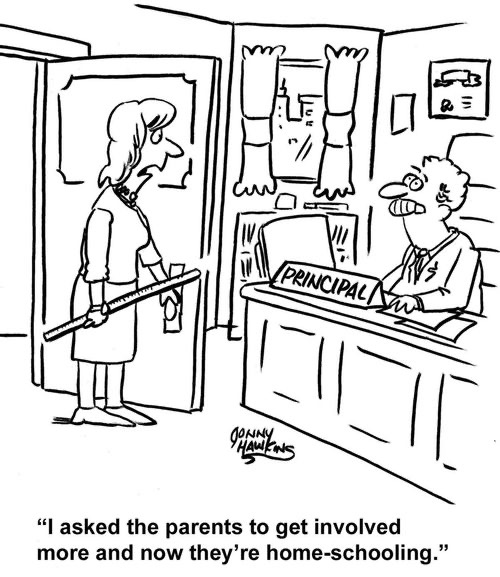
What has attracted Catholic parents to classical schools is a school environment that is faithful to Catholic teaching, conservative in policies and programs, and is willing to swim against the current cultural tide. But, if parents want to be categorically assured that the school in which they enroll their children is second-to-none in its adherence to Catholic doctrine and follows a worldview that exactly matches the family’s values, the best bet is to homeschool, where your children’s teacher will be of the same mind (literally) as you, and you also have final say as the school’s “principal” on the curricula to which your kids will be exposed.
With homeschooling, parents can undilutedly teach the Catholic Faith to their kids, having total control over what and how often theology and doctrine is taught and not having to worry about being politically correct when discussing current events and contrasting Catholic principles with our corrupted society’s viewpoints. Being that there is a chance your neighborhood Catholic school could end up disturbingly resembling the secular schools in the area except for being named after a Saint and requiring uniforms, a homeschool taught by a faithful mom and dad can guarantee the student will receive an absolutely authentic Catholic education.
Moreover, when the big talk in education is to meet the unique learning needs of each student, no type of schooling has the ability to customize education to a particular child better than homeschooling. Who better at knowing when and how to fuel a child’s passion for a specific subject matter than that kid’s own mom and dad? Who better than mom and dad at immediately recognizing their children’s frustrations and thus being able to spontaneously pivot to change subject matter or go outside for a break of playtime?
In my years as a teacher in the 1980s and then my initial years in the 90s as a principal, I considered it a mistake for parents to choose homeschooling as an alternative refuge from public schools or instead of enrolling in their parish school. Homeschools had limited curricula to follow and there was no assurance mom and/or dad knew the appropriate way to educate. But in my later educational career, thanks to both the internet and a rapidly growing community of homeschooling parents, homeschooling resources and courses are now easily accessible and often cheap or free. Hybrid classical/homeschool models now exist where children meet a couple days a week to learn together. A parent who is weak in math or science himself or herself can be assisted by a fellow parent in the community, by local tutors, or by online services. Numerous homeschooling courses are available in print or virtually, and curricula for all grade levels are plentiful.
There is a myth that homeschooled kids didn’t socialize enough and thus do not learn proper social skills. The truth nowadays, however, is that socialization in many schools means connecting with peers who are into drugs, sexual deviancy, and anti-God ideologies. Plus, there is an increasing number of opportunities for homeschoolers to socialize by working on school projects with other homeschooling peers, attend morning Mass together with other homeschool families as part of their school-day schedule, and participate with peers in the afternoons and on weekends in athletics, fine art programs, and parish events.
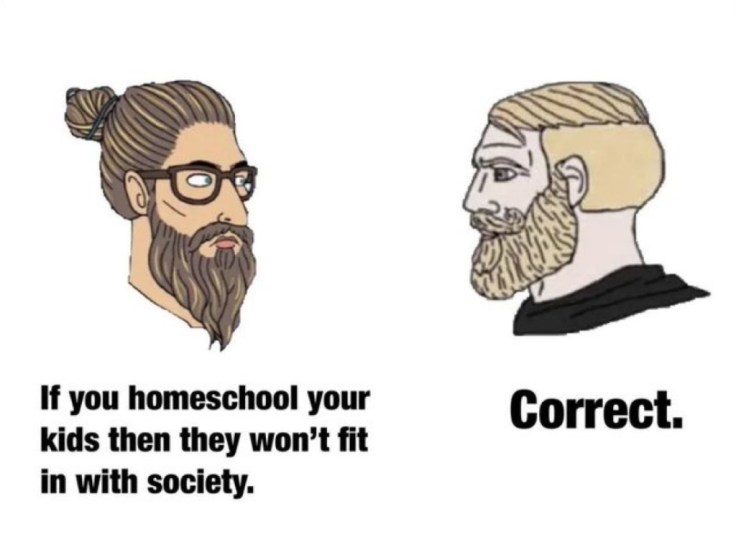
A further upside of homeschooling is that of 45 peer-reviewed studies on the performance of homeschooling, 78% found that the homeschooled students performed significantly better than their conventional or institutional school peers not only in academic achievement, but also in their social and emotional development, and future success both at college and into adulthood.
Finally, there are the add-on benefits a homeschooling family receives, such as the capacity to vacation when others are in school, the “authority” to take off random days when the weather is perfect for a hike, and the ability to turn the building of a backyard birdhouse into a math and science lesson. Homeschool families love their weekdays as much as traditional school families love their weekends, and a great joy of homeschooling is that learning happens both intentionally and unintentionally through structured and unstructured times. Homeschoolers do not sit down in their desks from 8am to 3pm Monday through Friday to fulfill the state’s mandated hours of formal instruction as public and private schools must do. You can find some homeschool parents scheduling as little as three hours per day and three days a week on focused, seated learning.
If parents have never homeschooled but want to give it a try, there are many trustworthy sources providing advice for how to get started, with fellow parents – usually mothers – providing your best information. That mom you see in the park with her school-age youngsters in the middle of a school day or who brings her school-age kids to daily Mass is most likely homeschooling and would love to share her expertise and encouragement. Additionally, an online search will help you gather materials that have been specifically designed for homeschoolers, such as lesson plans, textbooks, and virtual classes. Some accredited Catholic programs include:
- Angelicum
- Kolbe Academy
- Mother of Divine Grace
- Our Lady of Victory
- Seton Home Study
- Catholic Virtual
- Aquinas Learning
- Tan Academy
The most common excuse families will give on why they can’t consider homeschooling is they can’t afford to have one parent stay at home and forego their current double-income. Whereas this financial-aspect challenge is going to be tough, current homeschool families have overcome it by tightening their belts and forgoing excessive things they previously spent money on, from extravagant vacations to newer cars. Plus, they realized they no longer had the expense of childcare or private school tuition. While it will be a sacrifice, the benefits of homeschooling undoubtedly outweigh the alternative option of public schooling, and in many instances are superior to a Catholic school.
If you are authentically Catholic/Christian parents whose children are enrolled in public schools that are better at indoctrinating than educating, you would be foolish to not look elsewhere for the upcoming school year. Enrolling in a parochial or classical Catholic school will potentially be a quality choice, as long as you find one that is not just a secular-light school with crucifixes on their walls. A choice that is second-to-none in what is the best school for today’s Catholic family is to turn your house into a homeschool. Homeschooling parents assuredly know that depraved ideologies, watered-down faith formation, and pointless curricula will never take place in “their school.”
If you are not sure you can be a successful homeschooling educator, you need to realize that homeschooling is basically “parenting,” but regrettably most parents in recent generations have unsuccessfully outsourced schooling/parenting to government-run schools. You homeschooled your child all through his or her toddler and preschool years when you taught your youngster how to walk, talk, potty, color, count, read, run, ride, jump, negotiate, share, and wait-a-turn. Don’t stop now! What’s preventing you from making the 2024-25 school year your launch year for a homeschool?


“Except in rare occasions, no Catholic or Christian parent should enroll their children in a public school.”
If only I could get a “do-over.”
This is one of the most significant regrets of my parenthood. My failure led to off-spring who not only have left the faith, but adhere to and worship at the altar of the decadent Left.
From your keyboard to the eye of every Catholic parent. Please, conscientious Catholic father and mother: heed Dan’s wisdom. Don’t fail like I did.
LikeLiked by 1 person