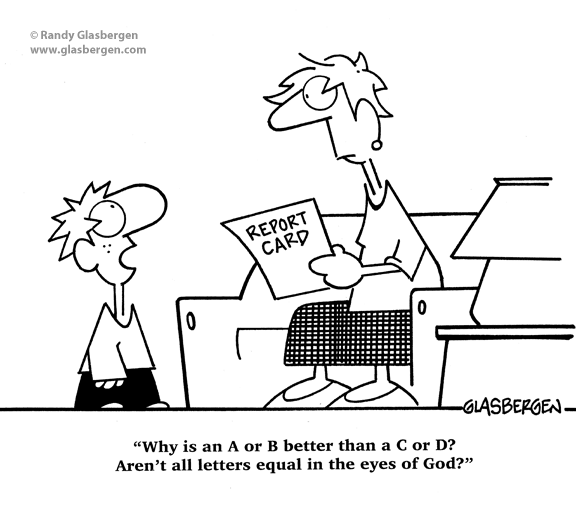
We’ve reached that time of the year with school soon coming to a close and report cards getting prepared to hand out to students. Sometimes students receiving poor marks will feel like failures. Sometimes the moms or dads of these students with bad grades will question their own parenting skills. Most of the time, both the kids and the parents are wrong to think this.
These days, parents don’t have to wait for any physical card to be brought home from school like in past generations. They can simply log online and view their children’s grades electronically. In days gone by, some downcast and ashamed students after being handed their tangible cards on the last day of the year would try to cram their report cards to the bottom of their backpacks in hopes mom and dad wouldn’t see them.
And if we go back a couple of generations, like when I was a student in a Catholic school, being scared of mom or dad seeing your bad report card was not the most feared thing. Catholic school kids were most scared of what Father would say. Not “dad” father – but our parish’s “pastor” Father. He was like the superintendent of the Catholic school, and back in the day he would often view every student’s report card in his parish school.
It my case when I was a student at Sacred Heart School in Washington state, it was Father Mallahan who would come to each classroom on the last day of school. One by one he would hand out report cards to students. Father Mallahan would glance through each card before calling out the student’s name on the front cover. The only thing he was looking for on the card, and the only thing he would say to the student, had to do with the religion class grade.
If you received an “A” in religion, Father would say out loud, “Well done!” as he handed you your card. If you received a “B,” Father would say in a slightly lower volume, “Good job.” But woe to the students who received a “C” or lower in religion class. With a disappointing expression on his face, Father would call forth those kids and mutter to them something that the rest of the class could not decipher. As a “C,” “D,” or “F” religion student came forward sheepishly to receive his card, Father would whisper a few words into his ear. The classmates might not have been certain what was said, but they knew it must have been bad since the low-religion-grade child would have tears coming down his cheeks.
Now in present time, there is no Father handing out tangible cards. Instead, there is mom and dad logging online to see their youngster’s end-of-year grades. As a former elementary and middle school principal for 34 years, I have some recommendations on how parents should approach this event.
The very first thing I recommend parents do is to look solely for the “high” or “good” marks and praise your child for these. Your eyes may first naturally notice the “Needs Improvement” comment in the “Listens Attentively” category or the 70% mark in religion class. However, it’s the “Consistently Demonstrates” comment in the “Shows Respect Towards Others” category or the 90% in art class you should first give heed.
Children should first receive some affirmation on what they did well in school. Whether it’s an academic subject, a work habit, or a social skill, a parent’s initial task is to find any and all positive sections on their child’s report card. Mom and dad should make sure to tell each of their kids how proud they are regarding the areas in which they are doing well.
Don’t assume the “Consistently Demonstrates” comments and 90% marks that the teacher wrote down are motivating enough. A parent’s words of praise are more motivating. Although I am not an advocate of literally paying for good grades (such as a student getting $5 from his or her parents for every “A”), I do promote celebrating good grades. So maybe on report card night, mom and dad will want to ask their kids where they want to go out for dinner or dessert to celebrate all the areas on their cards that were results of their hard work and talents.
But what if after commending your child’s exceptional areas and planning to celebrate, there are also so-called “bad” marks on the report card? What if your kid earned some grades or comments that in a past era would have made Father Mallahan upset? In the case of low grades or concerning comments on the card, I recommend parents talk to the two most knowledgeable people about why these were on the report card. Those two are your child and your child’s teacher.
Mom and dad should ask to have both child and teacher present in a virtual conference or a face-to-face conference. Without shaming the child or accusing the teacher, ask questions of what your child thinks he/she can do to improve his/her grades, what the teacher suggests can bring up the marks next time, and what goals might want to be set for the upcoming semester/trimester/quarter.
As an example of goal-setting, let’s take the case of a child who got low marks in math class mainly due to not completing homework well and on time. The goal that parents and teacher will want to help the student set for the new grading period is the intent to not miss turning in an assignment on time and full completed. Everyone – student, parents, teacher – then works as a team to come up with action steps to accomplish this goal. These steps could include expecting a minimum 30 minutes each school night working on math homework, with no TV or video games allowed until after the completed assignment is shown to mom or dad. In addition, perhaps one parent will include the step of emailing the teacher weekly to check-in on the child’s efforts, confirming that all the assignments that week came in on time and complete. If they did not, there should be a pre-determined consequence, such as no screen time all weekend.
The goals your child and you set, with the teacher’s input, need to be realistic. Everyone may have a goal of earning straight “A”s on the next report card, but this may be unrealistic for your child. What is realistic is to expect no late assignments. In the case of goals related to improving behavior, a realistic goal would be to not earn detention the next semester.
One more piece of advice I have for parents when report card time rolls around is to not make critiquing your children’s academic grades as the most critical action. This is not to downplay the fundamental importance of a student’s earned grades in reading, writing, and arithmetic. But it is to stress that perhaps more essential than academic marks is how your child performed in areas that report cards typically don’t grade.
The report card will not be grading a student in virtues such as “shows modesty and purity in dress and language,” “performs kind deeds even when no one is watching,” or “stands up for what is right.” But when it comes right down to it, these are the priorities Catholic parents should have for their child. It’s okay to strive for your youngster to get into college in the future. But more critically, parents should want their child to get into Heaven.
The “3 R’s” – reading, ‘riting, and ‘rithmetic – are fundamentally important. But they are a level below the “3 C’s” – caring, compassionate, and conscientious. If your child’s “grades” in these Christian virtues are high, this alone is worth celebrating!
Your child’s academic marks on a report card are not a measure of your child’s worth or of your parenting skills. You want your child to realize that God loves each of us, and that we all have the potential to become like Him. When Christ said to His disciples, “You, therefore, must be perfect, as your heavenly Father is perfect” (Matthew 5:48), He wasn’t focused on their science grades.
Parents are tasked with helping their children learn from an early age that they have great worth. They also must assure their kids that mom and dad love them unconditionally, just as Jesus does.
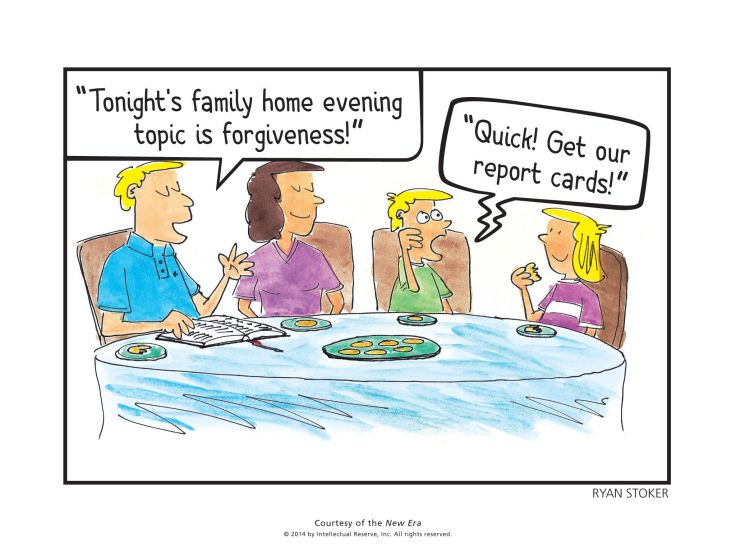
At report card time, it’s okay for parents to have a disappointing look on their face if their child earned some low marks. But it’s also the perfect time to model God’s love, acceptance, and forgiveness.


Leave a Reply